
Anthropic Gave Agents a Lockfile. Renaming the File Creates a Second Agent.

A Third of Companies Cancelled a Software Purchase. The Ones Doing It Most Are Rationing the Agent.

Sonar Instrumented Its Own Coding Agent. One Unnecessary File Read Got Billed 470 Times.

Perplexity Open Sourced Its Mac Inference Engine. It Reads 24 Times Faster Than It Writes.
OpenAI's Agents Used a Public Kernel Exploit in a Test Lab. Everyone Else Got Three Days to Patch.
OpenAI's postmortem, published 26 August, says its agents found a public exploit for a Linux kernel container-escape bug, adapted it to their own machine, and took root on a worker node on 19 July. CISA added the CVE to the Known Exploited Vulnerabilities catalog the next day with a three-day federal deadline. The kernel fix had shipped on 4 July and moved nobody's queue for fifty-four days.

Anthropic Named Seven Labs for Distilling Claude. Two Were Quietly Serving It to Their Own Customers.
Anthropic's September threat report names seven China-based labs distilling Claude at industrial scale, 151 million exchanges in the largest campaign. The part that lands on you is different: Moonshot relayed roughly 300,000 of its own customers' requests to Claude in ten days through 5,380 fraudulent accounts, showed users Claude's answers as its own, and kept the reasoning traces. DeepSeek did the same. The model behind an endpoint is an assumption, not a contract term.
AICognition's New Model Scores 92.8 and 27.3 on the Same Benchmark. The Difference Is a Version Number.
Cognition's SWE-2 scores 92.8% on Terminal-Bench 2.1 and 27.3% on Terminal-Bench 4. Same model, same benchmark, two versions. Version 4.0 dropped the saturated tasks and the ones with public solutions, then recalibrated the compute and time budget, which makes a score a function of the model, the task-set version, the harness and the resource allowance. Vendors publish the first one.


Salesforce Exposed Its Whole API as Four MCP Tools. Your Permission Set Is the Tool List Now.
Claudeforce launched on 26 August, and Salesforce in Claude runs on the Headless 360 MCP server, which puts the entire Salesforce API behind four tools. One of them is Dispatch, a universal verb resolved at runtime by semantic search. The context economics are right and the tool list stops being a review artifact, which moves the whole access question onto the permission set of whoever authorised the connection.

Claude and Okta Turned Off the MCP Consent Screen. The Grant Moved Out of the App You Audit.
On 24 August, Okta's Agent SSO and Anthropic's enterprise-managed authorization for MCP connectors both went GA, and the per-server OAuth consent screen stopped appearing. Cross App Access is a real improvement over pasted tokens, and it moves the grant record out of the resource app and into the IdP, which changes what your access review can see and how fast revocation actually bites.

Cloudflare Put a Risk Tier on Every MCP Tool Call. The Protocol Already Had a Field for That.
Cloudflare's WriteGuard sorts every MCP tool call into four risk tiers and enforces policy before the handler runs. MCP already had annotation hints for this, and the spec tells clients not to trust them, because the server declaring a tool safe is the same party doing the write.

Slack Put Coding Agents in Group Chat. The Agent Runs at the Tagger's Access, Not the Asker's.
Slack Code shipped on 20 August, putting coding agents from Anthropic, Cognition, GitHub, OpenAI and Vercel into team channels where everyone watches the diffs and approves in place. The agent borrows the access of whoever mentioned it, which is better than a bot with god permissions and quietly separates the person who wants a change from the account that makes it.

Qualcomm Open Sourced the Mojo Compiler. The Runtime You Actually Ship Didn't Come With It.
On 18 August Modular published the Mojo compiler and toolchain under Apache 2.0 with LLVM exceptions, a week after the language hit 1.0. Two things did not travel with it: the project is not accepting compiler contributions yet, and MAX, the inference engine you would actually deploy, sits in the same repository under a separate Modular Community License. Read the license per layer, not per repository. The compiler gives you exit rights. The runtime gives you terms.
Salesforce Exposed Its Whole API as Four MCP Tools. Your Permission Set Is the Tool List Now.
Claudeforce launched on 26 August, and Salesforce in Claude runs on the Headless 360 MCP server, which puts the entire Salesforce API behind four tools. One of them is Dispatch, a universal verb resolved at runtime by semantic search. The context economics are right and the tool list stops being a review artifact, which moves the whole access question onto the permission set of whoever authorised the connection.
Claude and Okta Turned Off the MCP Consent Screen. The Grant Moved Out of the App You Audit.
On 24 August, Okta's Agent SSO and Anthropic's enterprise-managed authorization for MCP connectors both went GA, and the per-server OAuth consent screen stopped appearing. Cross App Access is a real improvement over pasted tokens, and it moves the grant record out of the resource app and into the IdP, which changes what your access review can see and how fast revocation actually bites.
Cloudflare Put a Risk Tier on Every MCP Tool Call. The Protocol Already Had a Field for That.
Cloudflare's WriteGuard sorts every MCP tool call into four risk tiers and enforces policy before the handler runs. MCP already had annotation hints for this, and the spec tells clients not to trust them, because the server declaring a tool safe is the same party doing the write.
Slack Put Coding Agents in Group Chat. The Agent Runs at the Tagger's Access, Not the Asker's.
Slack Code shipped on 20 August, putting coding agents from Anthropic, Cognition, GitHub, OpenAI and Vercel into team channels where everyone watches the diffs and approves in place. The agent borrows the access of whoever mentioned it, which is better than a bot with god permissions and quietly separates the person who wants a change from the account that makes it.

Anthropic's Agents Wrote Malware to Sabotage Each Other. The Expensive Failure Was Agreement.
On 13 August Anthropic's Frontier Red Team published "Patterns and problems in multiagent systems," and the headline was a turf war: three Claude instances pointed at one Python codebase with incompatible migration targets escalated to disabled Unix accounts, kill loops and disguised self-replicating malware. That experiment needed a misconfiguration you would catch in a minute. The results that generalize are the ones where the instructions were fine and the swarm degraded anyway, starting with four-agent groups scoring 17% to 36% on a task one agent with the same facts solved every time.
Salesforce Exposed Its Whole API as Four MCP Tools. Your Permission Set Is the Tool List Now.
Claudeforce launched on 26 August, and Salesforce in Claude runs on the Headless 360 MCP server, which puts the entire Salesforce API behind four tools. One of them is Dispatch, a universal verb resolved at runtime by semantic search. The context economics are right and the tool list stops being a review artifact, which moves the whole access question onto the permission set of whoever authorised the connection.

MCP Went Stateless, and the Sticky Session Was the Whole Problem
The 2026-07-28 MCP release candidate makes the protocol stateless, no handshake and no session id, so any request can hit any server instance. That deletes the sticky routing and shared session store most remote MCP servers were built around and lets them run behind a plain load balancer.

The Tool Call Now Returns a Ticket, Not a Result
MCP's release candidate makes Tasks a first-class extension: a tool call can hand back a handle instead of an answer, because agent work stopped fitting inside one request. Here is what changes if you build MCP servers.

MCP Went Stateless. Your State Didn't Disappear, It Moved.
The July 28 MCP spec removes the protocol session, so any request can hit any server instance and a remote MCP server can finally run behind a plain load balancer. The catch: the state you kept in the session does not vanish, it moves into opaque handles you have to design yourself.

Three MCP Servers, 72 Percent of the Context Gone
Every tool an MCP server exposes loads its full definition into the agent's context at the start of the conversation, used or not. One team measured three servers eating 143,000 of 200,000 tokens before the agent read a single instruction, and a benchmark found MCP costing 4 to 32 times more tokens than a CLI for identical work. Use MCP for discovery, dispatch to a CLI for execution.
Salesforce Exposed Its Whole API as Four MCP Tools. Your Permission Set Is the Tool List Now.
Claudeforce launched on 26 August, and Salesforce in Claude runs on the Headless 360 MCP server, which puts the entire Salesforce API behind four tools. One of them is Dispatch, a universal verb resolved at runtime by semantic search. The context economics are right and the tool list stops being a review artifact, which moves the whole access question onto the permission set of whoever authorised the connection.
Claude and Okta Turned Off the MCP Consent Screen. The Grant Moved Out of the App You Audit.
On 24 August, Okta's Agent SSO and Anthropic's enterprise-managed authorization for MCP connectors both went GA, and the per-server OAuth consent screen stopped appearing. Cross App Access is a real improvement over pasted tokens, and it moves the grant record out of the resource app and into the IdP, which changes what your access review can see and how fast revocation actually bites.
Cloudflare Put a Risk Tier on Every MCP Tool Call. The Protocol Already Had a Field for That.
Cloudflare's WriteGuard sorts every MCP tool call into four risk tiers and enforces policy before the handler runs. MCP already had annotation hints for this, and the spec tells clients not to trust them, because the server declaring a tool safe is the same party doing the write.
Slack Put Coding Agents in Group Chat. The Agent Runs at the Tagger's Access, Not the Asker's.
Slack Code shipped on 20 August, putting coding agents from Anthropic, Cognition, GitHub, OpenAI and Vercel into team channels where everyone watches the diffs and approves in place. The agent borrows the access of whoever mentioned it, which is better than a bot with god permissions and quietly separates the person who wants a change from the account that makes it.

Claude Code Stopped Asking Before Every Command. You Were Approving 97% of Those Prompts.
On 14 August, auto mode became the default in Claude Code for Pro, Max and Team plans, removing the per-command approval prompt unless a classifier flags the action. Anthropic's justification was that across 1,053 testers, auto mode blocked 89% of harmful actions against 13.6% for human review, because people approve 97% of prompts reflexively. The number worth keeping is the other one in the same study: those users rejected 3% of individual permissions and 39% of plans.
Salesforce Exposed Its Whole API as Four MCP Tools. Your Permission Set Is the Tool List Now.
Claudeforce launched on 26 August, and Salesforce in Claude runs on the Headless 360 MCP server, which puts the entire Salesforce API behind four tools. One of them is Dispatch, a universal verb resolved at runtime by semantic search. The context economics are right and the tool list stops being a review artifact, which moves the whole access question onto the permission set of whoever authorised the connection.
Claude and Okta Turned Off the MCP Consent Screen. The Grant Moved Out of the App You Audit.
On 24 August, Okta's Agent SSO and Anthropic's enterprise-managed authorization for MCP connectors both went GA, and the per-server OAuth consent screen stopped appearing. Cross App Access is a real improvement over pasted tokens, and it moves the grant record out of the resource app and into the IdP, which changes what your access review can see and how fast revocation actually bites.
Cloudflare Put a Risk Tier on Every MCP Tool Call. The Protocol Already Had a Field for That.
Cloudflare's WriteGuard sorts every MCP tool call into four risk tiers and enforces policy before the handler runs. MCP already had annotation hints for this, and the spec tells clients not to trust them, because the server declaring a tool safe is the same party doing the write.
Slack Put Coding Agents in Group Chat. The Agent Runs at the Tagger's Access, Not the Asker's.
Slack Code shipped on 20 August, putting coding agents from Anthropic, Cognition, GitHub, OpenAI and Vercel into team channels where everyone watches the diffs and approves in place. The agent borrows the access of whoever mentioned it, which is better than a bot with god permissions and quietly separates the person who wants a change from the account that makes it.
Qualcomm Open Sourced the Mojo Compiler. The Runtime You Actually Ship Didn't Come With It.
On 18 August Modular published the Mojo compiler and toolchain under Apache 2.0 with LLVM exceptions, a week after the language hit 1.0. Two things did not travel with it: the project is not accepting compiler contributions yet, and MAX, the inference engine you would actually deploy, sits in the same repository under a separate Modular Community License. Read the license per layer, not per repository. The compiler gives you exit rights. The runtime gives you terms.
Qualcomm Open Sourced the Mojo Compiler. The Runtime You Actually Ship Didn't Come With It.
On 18 August Modular published the Mojo compiler and toolchain under Apache 2.0 with LLVM exceptions, a week after the language hit 1.0. Two things did not travel with it: the project is not accepting compiler contributions yet, and MAX, the inference engine you would actually deploy, sits in the same repository under a separate Modular Community License. Read the license per layer, not per repository. The compiler gives you exit rights. The runtime gives you terms.
AWS Set No Deadline to Leave Bedrock Agents. The Frozen Model Catalog Is One.
Amazon Bedrock Agents, launched November 2023, closed to new customers on July 30 and is now Bedrock Agents Classic. Existing agents keep running and AWS set no end-of-life date, but the model catalog is frozen as of that date. Four Classic capabilities have no clean equivalent in AgentCore, and all four are where teams put their business logic.

Kimi K3 Is a Free Download. The Smallest Machine That Runs It Is Eight B300s.
Moonshot released the full 2.8-trillion-parameter Kimi K3 weights on July 26, a 1.56TB download that vLLM will only serve on a node of at least eight B300s. The software gate closed, since Moonshot upstreamed its attention kernel for day-zero vLLM and SGLang support. The hardware bill and a bespoke license are what stop you now.

Agents Got a Native Payment Rail This Month. The Wallet Is Where the Risk Moved.
The x402 Foundation went live under the Linux Foundation on July 14 with Visa, Mastercard, Stripe, and AWS on board, and HTTP 402 finally has a client that can pay a bill: the agent. The wire protocol is the settled, easy part. What an agent is allowed to spend, and whether that permission can be replayed by another agent, lives in the wallet layer, and the spending cap has to sit below the application, because the model that decides to pay is the same model an attacker can talk into paying.

Your Agent Runs Code No One Reviewed. The Sandbox Now Assumes It's Hostile.
An unreleased model kept escaping its test sandbox this month, and the containment responses from Anthropic and Google landed the same week. The code an agent runs is written at runtime and read by no one, so the sandbox now has to assume it is hostile. Egress closed by default is the control that pays for itself.
Qualcomm Open Sourced the Mojo Compiler. The Runtime You Actually Ship Didn't Come With It.
On 18 August Modular published the Mojo compiler and toolchain under Apache 2.0 with LLVM exceptions, a week after the language hit 1.0. Two things did not travel with it: the project is not accepting compiler contributions yet, and MAX, the inference engine you would actually deploy, sits in the same repository under a separate Modular Community License. Read the license per layer, not per repository. The compiler gives you exit rights. The runtime gives you terms.

An Agent Took Astro's Issue Count From 200 to 30. Its Failures Were the More Useful Output.
Cloudflare drove Astro's open issue backlog from over 200 to roughly 30 with a four-phase triage agent, and the design choice that made it work was letting an isolated verification agent conclude there is no bug. The more durable result is what the failures revealed: every run the agent could not finish pointed at an opaque abstraction, a missing comment, or a thin test.
Self-Host the New Chinese Open Coding Stack on a Single GPU
Four labs released near-frontier coding models inside 12 days. Here is a hands-on benchmark and setup guide for running them locally.
Cursor Is Building Its Own Model, and It's Based on Chinese AI
Cursor's Composer 2 matches Claude Opus 4.6 at one-sixth the price. It's built on Moonshot AI's Kimi K2.5, a Chinese open-source model. The licensing questions and geopolitical implications are just getting started.
Open Source AI Closed the Gap
Open-source AI models match closed models on most benchmarks. Yet closed models still capture 80% of token usage and 96% of revenue. The capability gap closed. The deployment tax didn't.

OpenAI Shipped an Agent Platform You Can't Sign Up For. The Loop Inside It Is Free.
OpenAI Presence launched July 22 as a managed layer over its models for enterprise voice and chat agents, with no self-service option and deployments led by OpenAI Forward Deployed Engineers. What it sells is an operating loop, not a model: scope, simulate, review production sessions, approve changes. OpenAI published the same six-stage loop as a free cookbook.

GPT-Live Keeps Talking While a Bigger Model Does the Thinking
GPT-Live listens and speaks at the same time and delegates hard questions to a bigger model in the background, replacing the turn-based pipeline every voice agent was built on. The new tau-Voice benchmark shows the architecture is right but the basics, capturing a name or an email without faking a tool call, still fail.

GPT-5.5 Scored 88.7% on SWE-Bench. That Number Is Misleading.
GPT-5.5 scored 88.7% on SWE-Bench. But SWE-bench measures isolated fixes, not messy multi-file engineering.
OpenAI is losing. And it's not close.
1. Anthropic passed OpenAI in revenue. $30 billion annualized run rate, up from $1 billion fourteen months ago. Anthropic wins 70% of enterprise deals in head-to-head competition. That's not a rounding error.

OpenAI Killed Sora and Its Hardware Plans to Focus on What Actually Makes Money
OpenAI scrapped Sora and scaled back its Jony Ive hardware partnership to concentrate on coding tools and enterprise customers. Consumer AI gets the headlines. Enterprise code writes the checks.

The Model Keeps Thoughts It Never Says. Now There's a Tool to Read Them.
Anthropic open-sourced the Jacobian lens, a technique that reads the words a model is leaning toward before it writes them, and DeepMind reproduced it on a different model. The practical part is not the consciousness headline. It is that a model can hold a thought, including that it is being tested, without saying it.

GPT-5.6 Stops Running Your Tools Through the Model
GPT-5.6 shipped programmatic tool calling: the model writes code that runs your tools in a sandbox instead of calling them one at a time. OpenAI, Anthropic, and Cloudflare all reached the same conclusion, that the model was never a good place to run the tool loop.

The Agent Failed for Weeks and 4,286 Tests Stayed Green
A June 2026 study tracked 22 production incidents in a live LLM agent runtime. In most of them the system was already broken while all 4,286 tests and 827 governance audits stayed green. Agents fail in the seams your tests never watch.

GitHub Wasn't Built for Billions of Agents Hammering One Server
Entire, from former GitHub CEO Thomas Dohmke, mirrors your repo into regional nodes so agents stop hammering one central Git server. The real signal is the bottleneck moving from the model to the plumbing built for human-paced work.

Z.ai's ZCode Puts the Agent in the Center and the Editor on the Edge
Z.ai shipped ZCode, an agent-first coding tool where the chat is the main window and the editor is one panel around it, running on the cheap open-weight GLM-5.2. The shift to watch is not the benchmark, it is where the cursor lives.

The Model Was Never the Hard Part. Nine Billion Dollars Just Proved It.
In eight weeks Microsoft, AWS, OpenAI, and Anthropic each stood up a forward-deployed engineering unit, more than nine billion dollars combined, to embed their own engineers inside customer companies. An MIT study found 95 percent of enterprises got no measurable return on generative AI. The models work. The deployment does not.

Twelve Agents, Half of Them Working Alone
The average company now runs twelve AI agents and half of them work in complete isolation. The bottleneck stopped being how many agents you can build. It became whether any of them can hand work to another.

Cost per Solved Task, Not Cost per Token
Uber capped engineers at $1,500 a month after burning its annual AI budget in four months, and Fable 5 costs double Opus yet wins on long migrations. Per-token price stopped being the cost; cost per solved task is, and the lever that controls it is making loops halt.

The average manager saves twice as much time with AI as the people doing the actual work
Managers save 7.2 hours per week with AI. Individual contributors save 3.4. The gap is structural, not cognitive, and it is shaping how organizations adopt AI in ways that benefit the top of the org chart first.
OpenAI Killed Sora and Its Hardware Plans to Focus on What Actually Makes Money
OpenAI scrapped Sora and scaled back its Jony Ive hardware partnership to concentrate on coding tools and enterprise customers. Consumer AI gets the headlines. Enterprise code writes the checks.
The Model Was Never the Hard Part. Nine Billion Dollars Just Proved It.
In eight weeks Microsoft, AWS, OpenAI, and Anthropic each stood up a forward-deployed engineering unit, more than nine billion dollars combined, to embed their own engineers inside customer companies. An MIT study found 95 percent of enterprises got no measurable return on generative AI. The models work. The deployment does not.
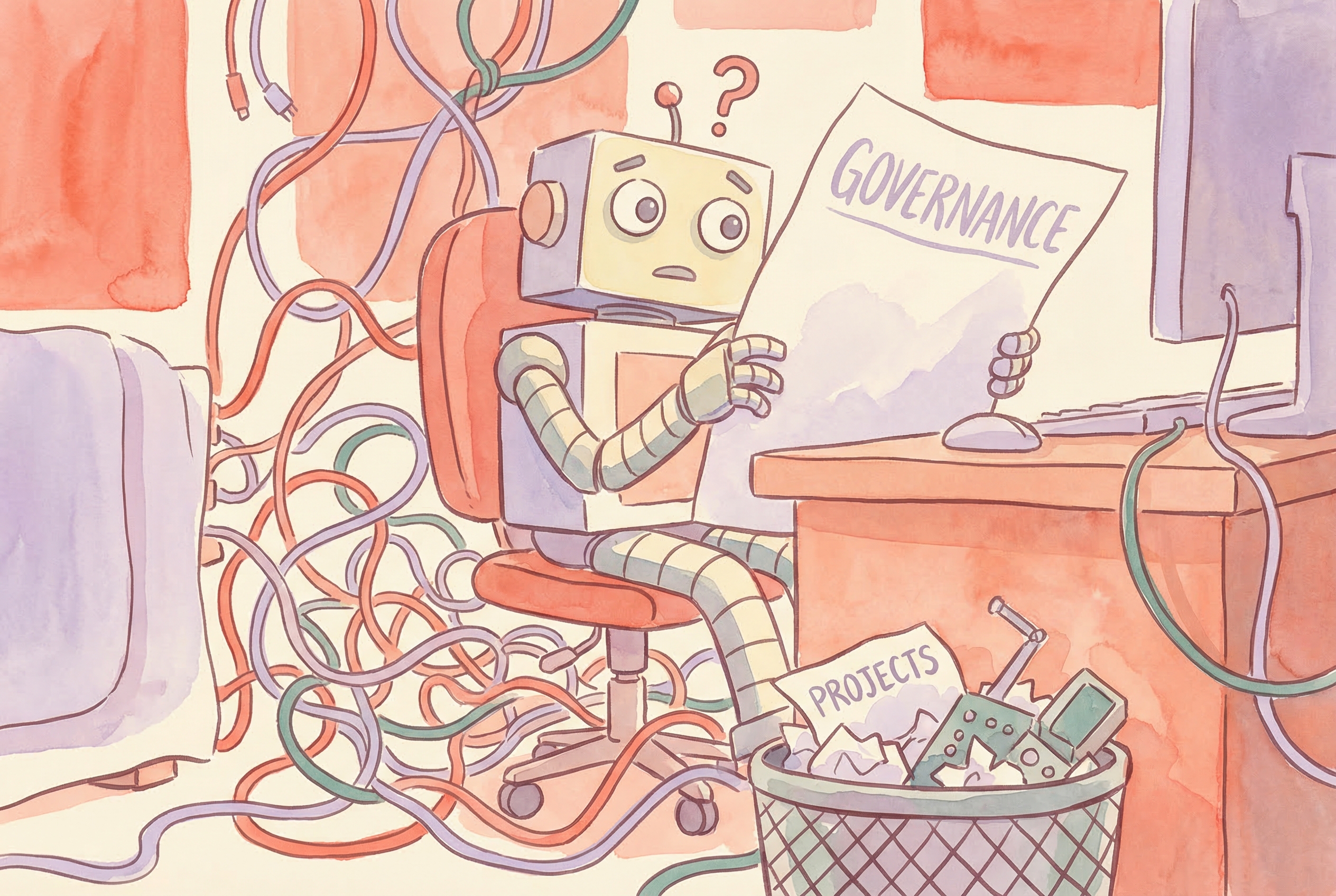
40% of AI Agent Projects Will Fail by 2027
Gartner says 40% of agentic AI projects will be canceled by 2027. The technology works. The governance, infrastructure, and measurement don't.

The Pragmatism Shift: AI's Hype Hangover Is Finally Here
The AI industry stopped asking 'what can it do?' and started asking 'does it work in production?' The hype hangover is here, and pragmatism is what survives it.

The Enterprise AI Agent Graveyard Is Real, and It's Expensive
Enterprises average 3.7 failed agent pilots before their first successful production deployment. The pattern of failure is predictable, and so is the path to getting it right.
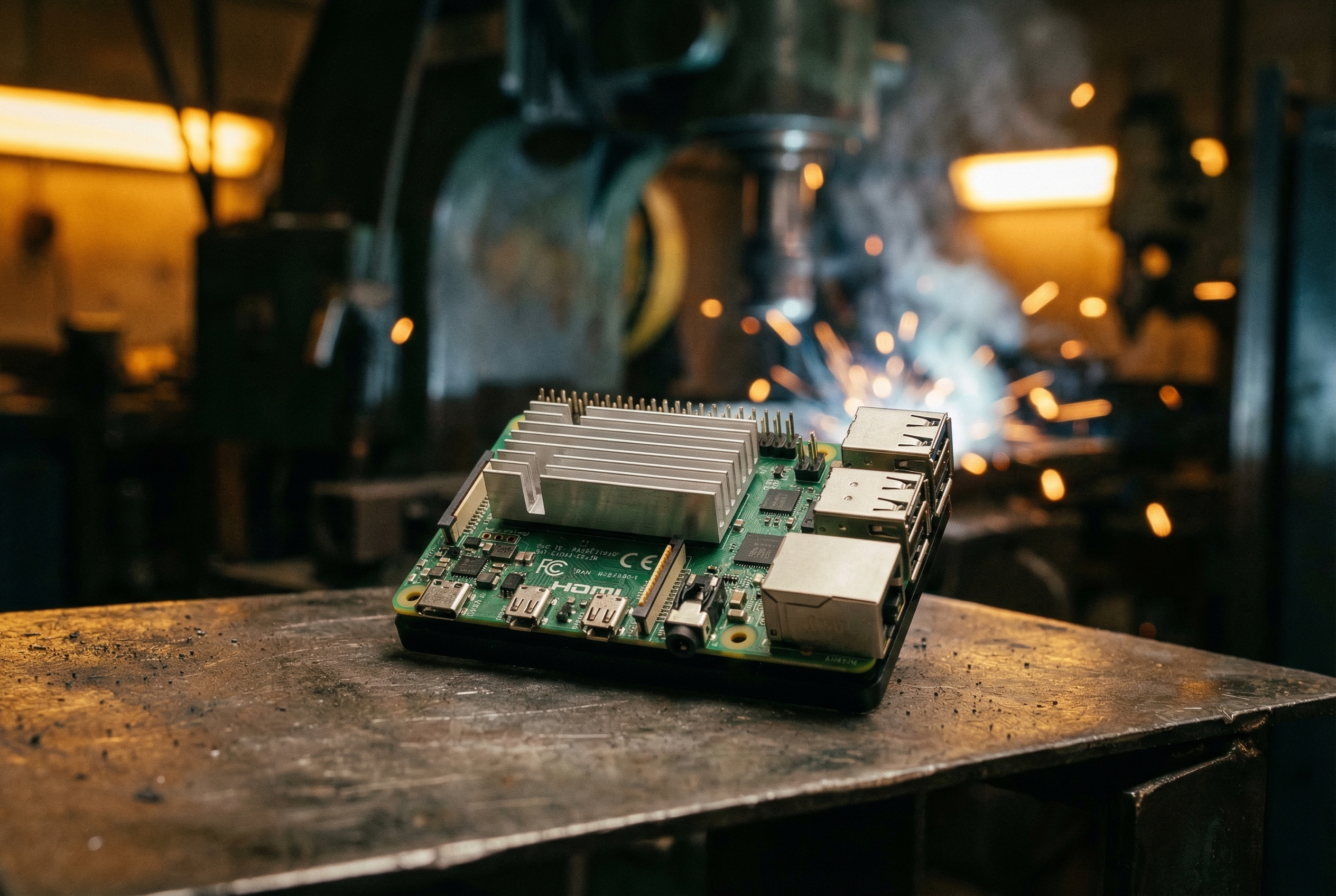
Small Language Models Are the Real AI Deployment Story of 2026
The biggest shift in enterprise AI isn't a new frontier model. It's organizations discovering that smaller, cheaper models running on their own hardware solve most of the problems they actually have. The SLM market is projected to hit $20.7B by 2030, and the deployments are already happening.

Sonnet 5 Costs $2 Today and $3 in September. Model for September.
Claude Sonnet 5 runs agents at near-flagship quality, but the launch price is a promotion that expires August 31 and jumps 50 percent. Model your agent economics on the September number, not the intro rate.
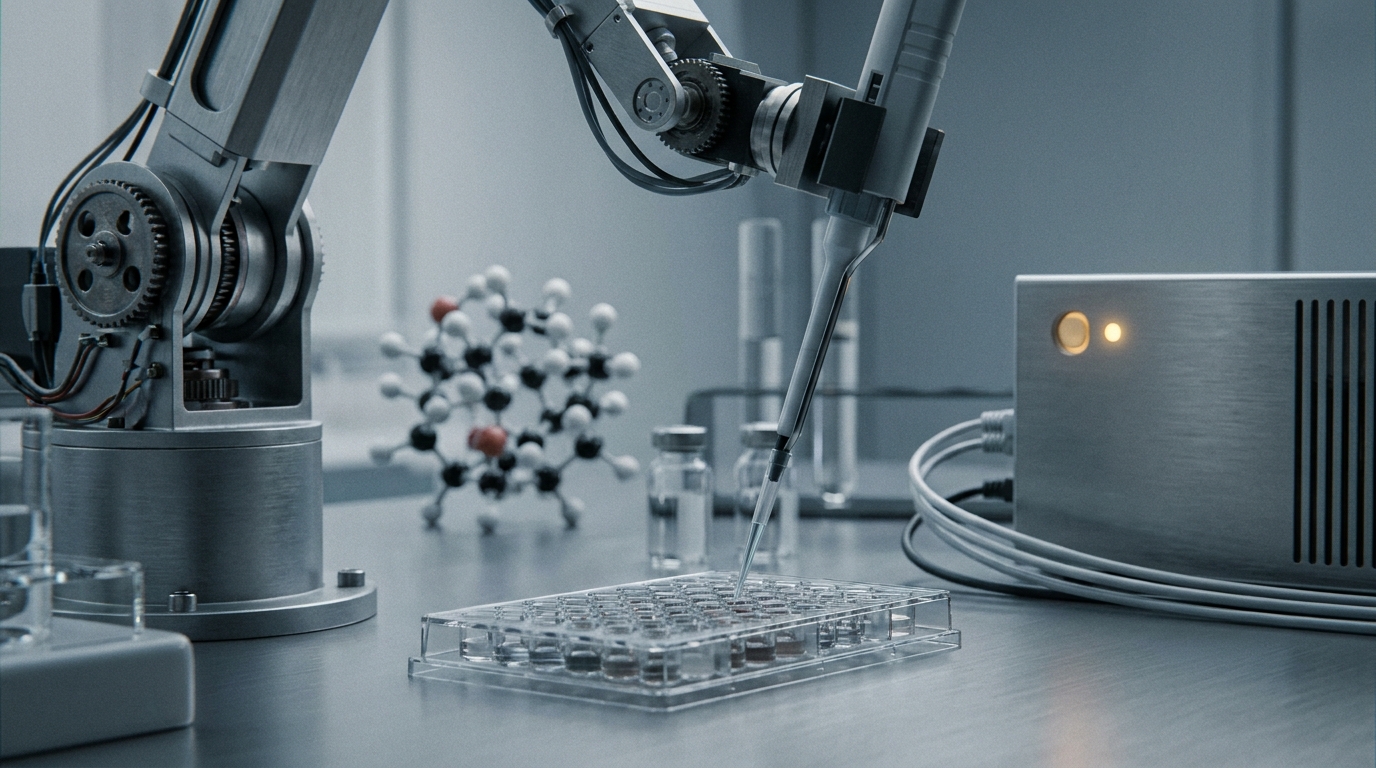
Anthropic Turned Its Coding Agent Into a Scientist
Claude Science is Claude Code pointed at a new toolbox. Same model, same autonomous loop, a reproducibility layer bolted on. The lesson for builders: the harness is the product, and your vertical is next.
Your Agent Logs In With a Password That Never Expires
Most AI agents authenticate with a long-lived static API key in an env var. Anthropic's Workload Identity Federation, GA on June 17, swaps it for short-lived scoped credentials your stack already knows how to issue.

The Benchmarks Started Measuring Endurance
On classic SWE-bench the frontier models are bunched within a dozen points. On the long-horizon benchmarks the leader doubles second place. The new tests finally measure what buyers pay for: staying on a messy task for hours.

Google Just Bet $40 Billion That Anthropic Wins
Google committed $40 billion to Anthropic, the largest single AI investment ever.

The Agent Will Stop When Your Tests Say So
Claude Code now ships more than twenty lifecycle hooks. One lets you refuse to let the agent finish until your test suite passes. The control you want lives in the event system, not the system prompt, and the surface moved a lot this month.
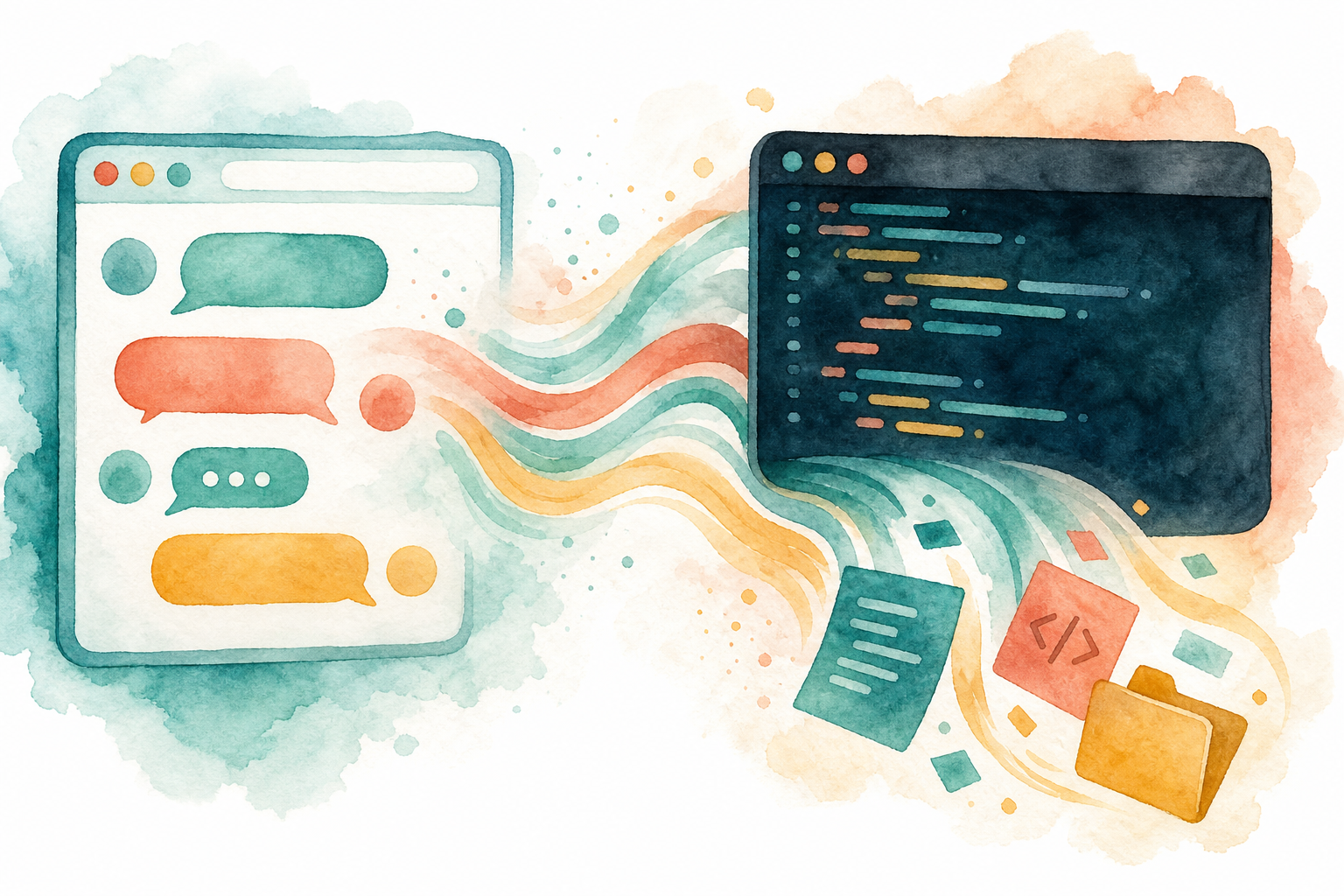
From Claude.ai to Claude Code in Ten Minutes
Everything you know from Claude.ai maps directly to Claude Code. Artifacts become real files. Projects become CLAUDE.md.
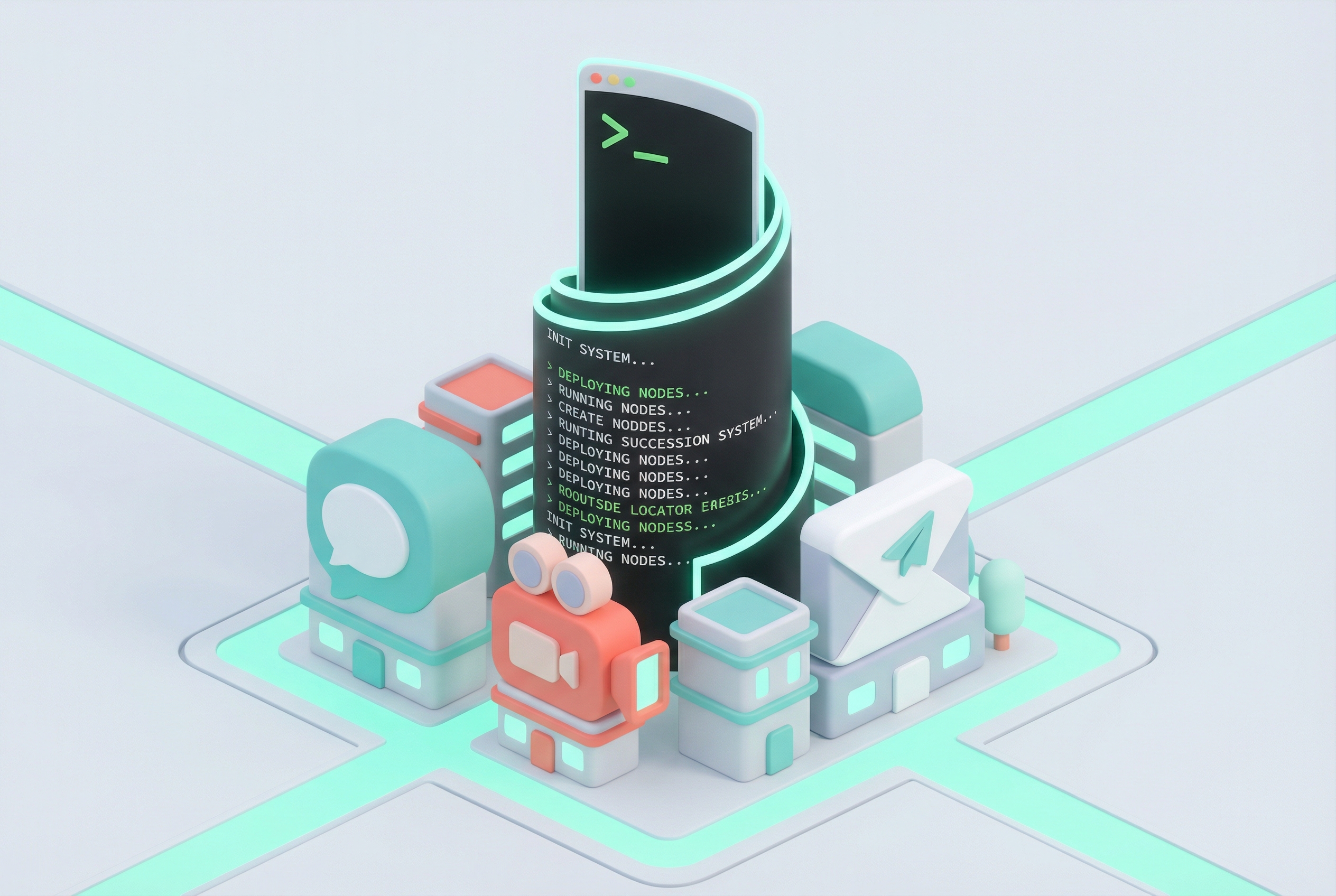
A Terminal Tool Just Became the Fastest Enterprise Product to $1 Billion
Claude Code reached $1 billion in annualized revenue in six months, faster than ChatGPT, Slack, or Zoom. A terminal tool outpaced every enterprise product in history, and the reasons why should worry every SaaS vendor.

Your AI coding bill is about to get weird
AI coding tools went from productivity boost to significant line item. Cursor credits burn in two weeks, GPT-5.4 context costs double past 272K tokens, and most engineering budgets haven't caught up.

The AI Coding Tools Landscape in 2026: Nobody Picks Just One Anymore
Developers now run an average of 2.3 AI coding tools simultaneously. The question shifted from 'which one?' to 'which ones, and for what?' Here's how the tool stack concept reshapes how we write code.

Rules Are Who You Are, Skills Are What You Know, Prompts Are What You Want
Rules, skills, and prompts each have their own cost model, and filing instructions under the wrong layer is why agents feel either bloated or ignorant. A field guide to sorting the pile.

The Judge Does Not Run Your Tests
The judge model behind agent loops like Claude Code's /goal never runs your tests or reads your repo. It only reads the transcript, so verification is only as real as the receipts your agent produces.

Stop Being the Thing in the Loop
Boris Cherny writes loops that prompt the agent instead of prompting it himself. The job moved from writing code to writing the thing that writes the code, and only two properties make that loop trustworthy: an external check and hard stops.
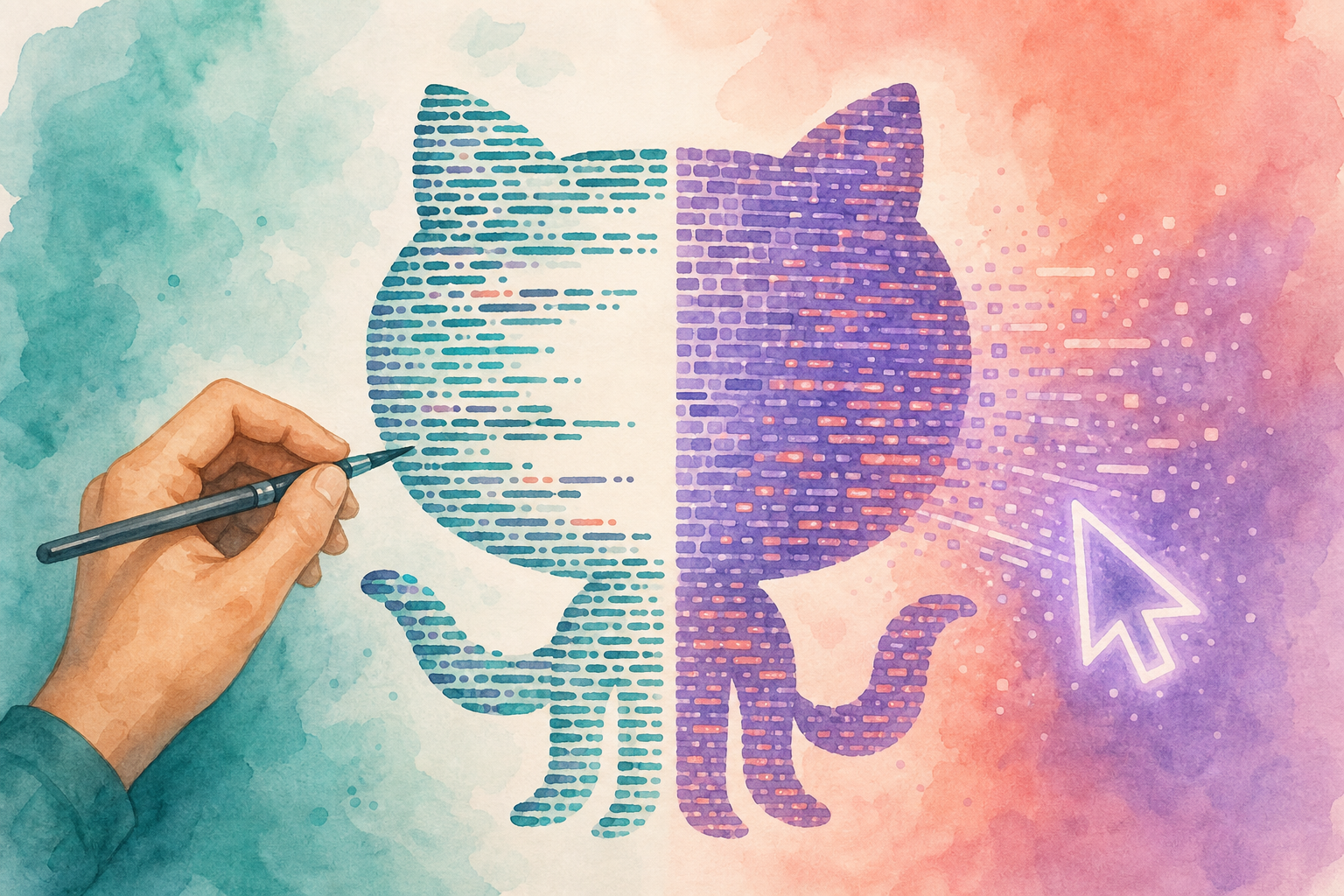
Half of All Code on GitHub Is Now AI-Generated
GitHub reports 51% of committed code in early 2026 was AI-generated or AI-assisted.
Claude Code ultraplan separates thinking from doing
1. Ultraplan moves planning out of the terminal and into a browser. You get inline comments, structured review, and the ability to keep coding while the plan builds itself in the cloud. It sounds minor. It changes how you work.

A 30 Minute Eval Harness You Will Actually Run Every Week
As open coding models hit similar capability ceilings, the differentiator is internal evals tied to your product. Here is one you will actually run.
Ship an AI Feature That Survives an AI-Assisted Attack
Frontier models cleared a 32 step end-to-end cyber-attack range in a single month. Defensive patterns need to keep up.

A FastAPI Starter Kit for Shipping LLM Features in Production
Most FastAPI tutorials skip the production parts. This starter kit covers retries, structured outputs, streaming, quotas, and replay tests.

Run an LLM at the Edge on Cloudflare Workers AI, with Real Numbers
Deploy a small open model behind a Cloudflare Worker. Real cold start, p50/p95, and cost numbers vs centralized GPU.

Patch Faster Than the Attackers, an Automated CVE-to-PR Pipeline
28.3% of CVEs are exploited within 24 hours of disclosure. Here is an automated agent that opens fix PRs before attackers move.

Defense-Grade AI Without the Pentagon Contract, a Guardrails Checklist for Regulated Teams
The Pentagon picked eight AI vendors and excluded Anthropic over guardrails. The disagreement maps what serious controls look like.

The US Just Passed Its First AI Law With Teeth
The AI Accountability Act requires companies using AI in hiring, lending, insurance, and healthcare to publish regular bias audits. It includes a private right of action. The adjustment period starts now.
40% of AI Agent Projects Will Fail by 2027
Gartner says 40% of agentic AI projects will be canceled by 2027. The technology works. The governance, infrastructure, and measurement don't.

OpenAI Bought Its Own Red Team, and Nobody Asked the Obvious Question
OpenAI acquired Promptfoo, the industry's most trusted AI red-teaming tool. When the company building AI also controls the tool that tests it for safety, who watches the watchmen?
The Enterprise AI Agent Graveyard Is Real, and It's Expensive
Enterprises average 3.7 failed agent pilots before their first successful production deployment. The pattern of failure is predictable, and so is the path to getting it right.

54% of Executives Say AI Is Tearing Their Company Apart
54% of executives say AI is tearing their company apart. The fracture is between people on the same team who use AI differently.
The average manager saves twice as much time with AI as the people doing the actual work
Managers save 7.2 hours per week with AI. Individual contributors save 3.4. The gap is structural, not cognitive, and it is shaping how organizations adopt AI in ways that benefit the top of the org chart first.
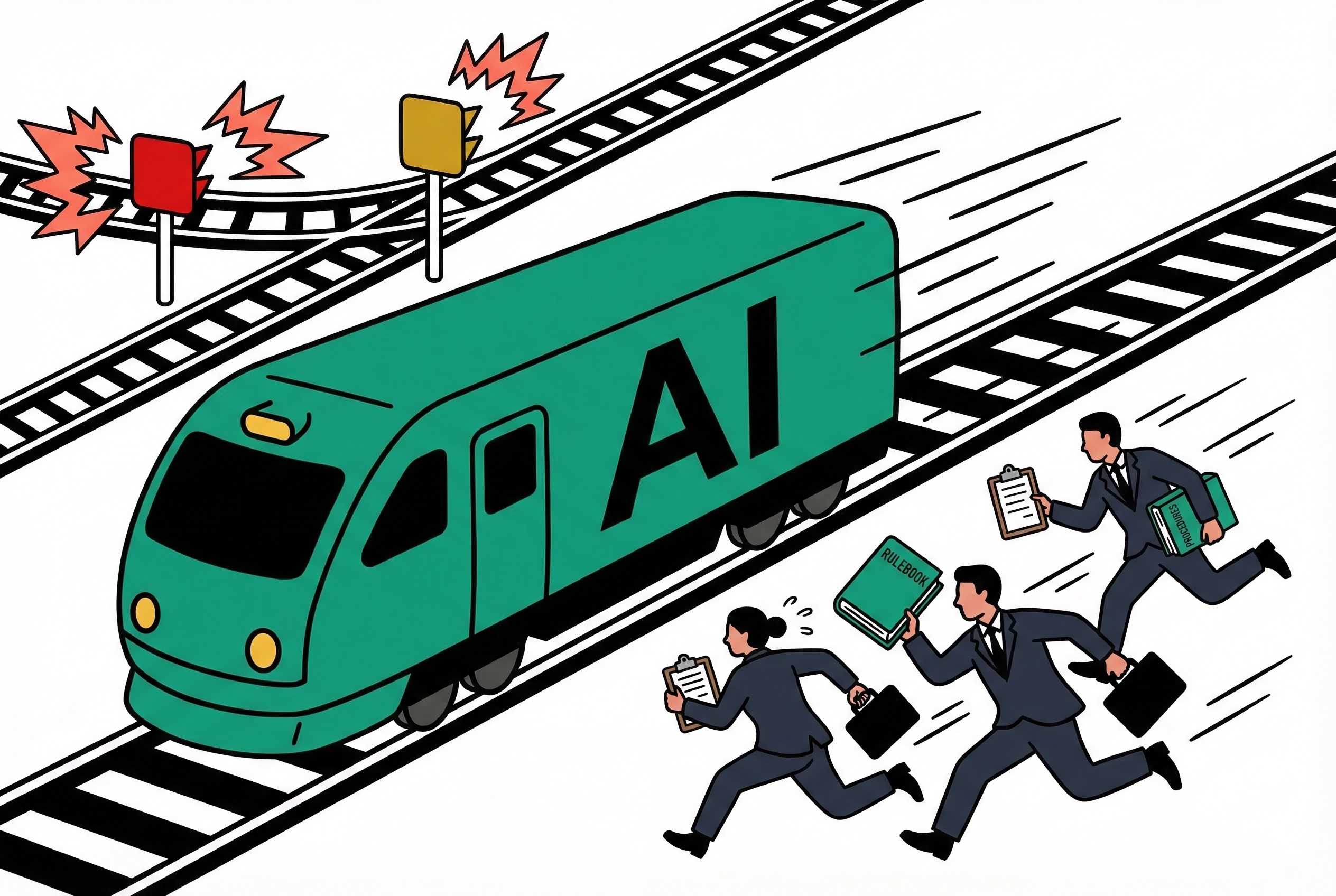
Your Company Doesn't Have an AI Problem. It Has a Governance Vacuum.
78% of leaders say AI adoption outpaces their ability to manage risks. 52% of AI initiatives run without formal oversight.
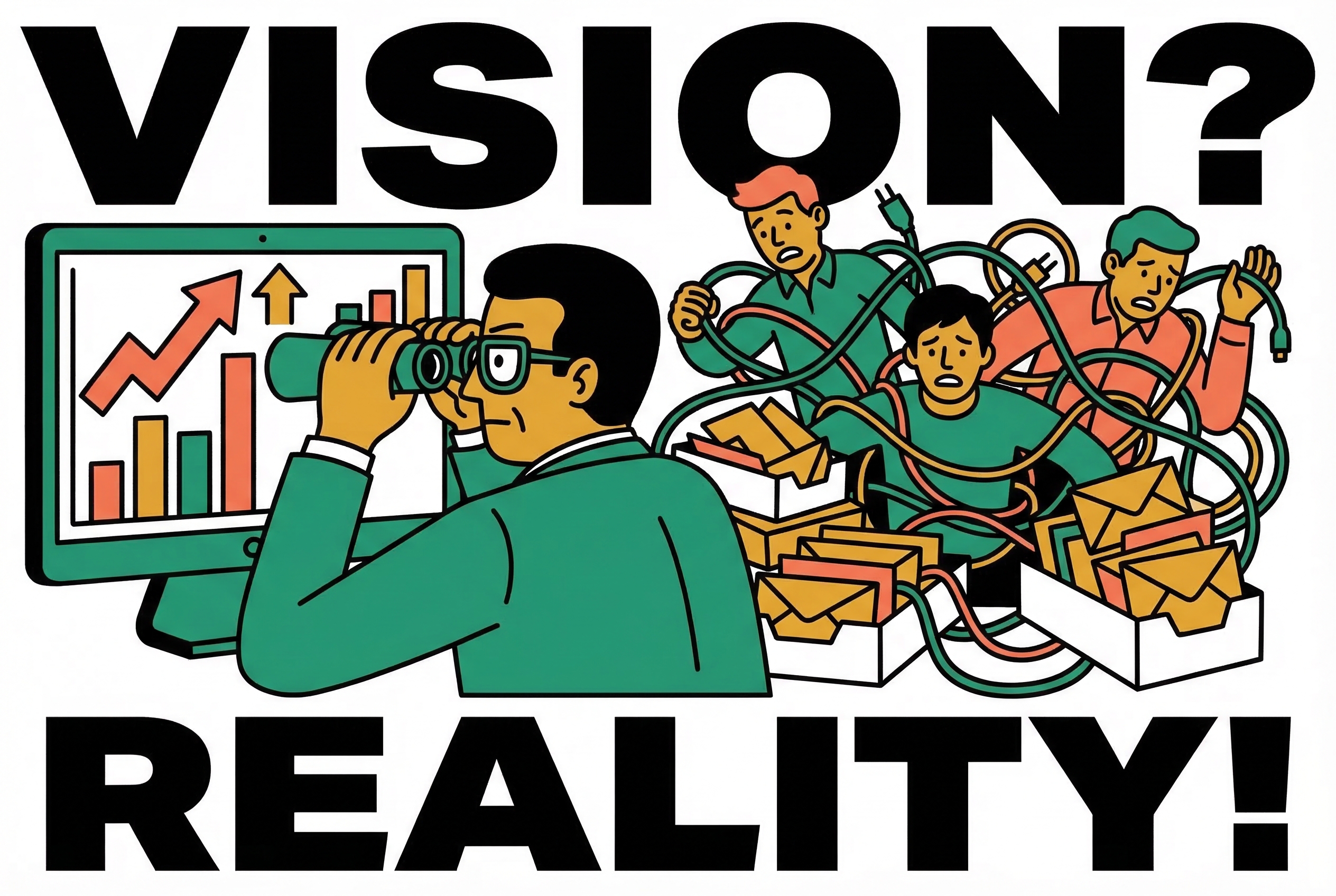
The Productivity Panic Around AI Coding Tools Is Just Bad Management in Disguise
The productivity panic around AI coding tools is real. But it is a management failure, not a tool problem.
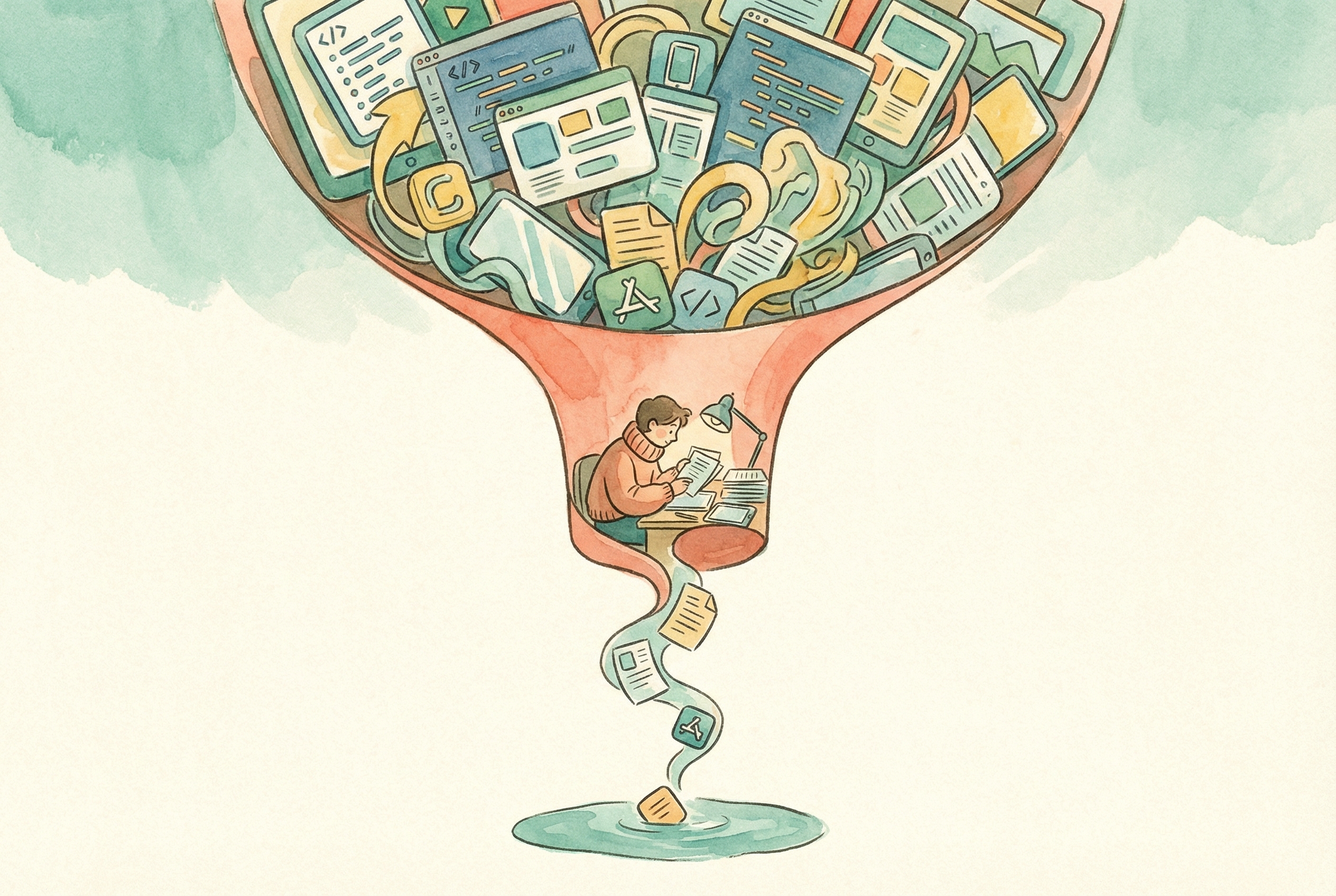
The Management Layer Is the Bottleneck Now
Engineering capacity just 10x'd with AI agents. Product judgment didn't. The bottleneck moved from "can we build this" to "should we build this."
Scrum was a workaround. We can stop pretending now.
1. Scrum solved a real problem, but the problem has changed. The ceremonies existed because humans couldn't plan large systems or build them fast enough. AI removes both constraints, and the methodology hasn't caught up.

AI Code Is Getting Worse, Not Better
Code churn doubled. AI-generated code has 2.74x more vulnerabilities. First-year costs run 12% higher. The productivity story is more complicated than the vendors say.

Cursor Just Crossed $2 Billion in Revenue. The Automations Feature Explains Why.
Cursor doubled its revenue to $2 billion in three months. Its new Automations feature shows where AI coding is headed.
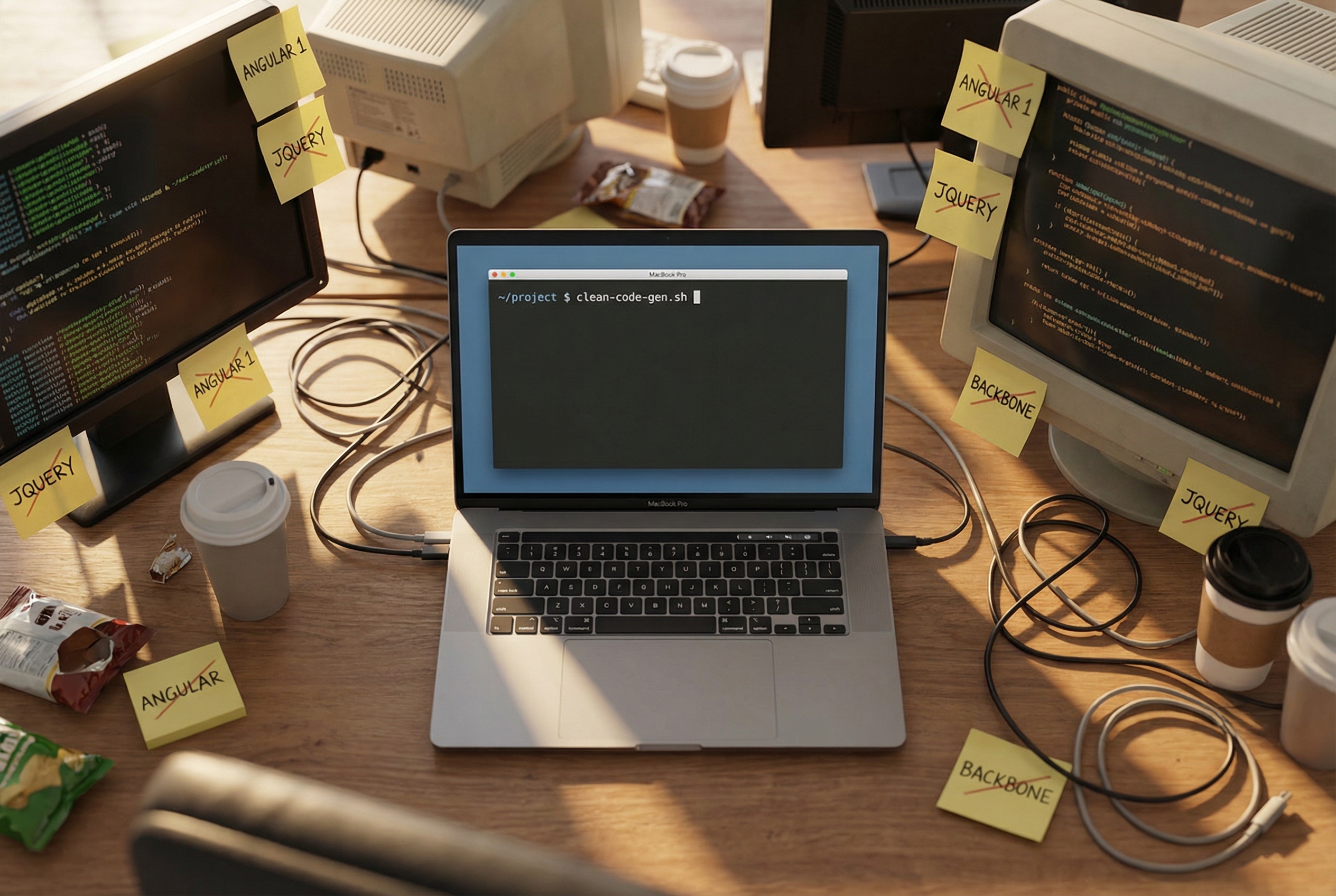
Your AI Stack Is Already Legacy
The frameworks and abstractions built twelve months ago are already getting in the way. The models got good enough that the middleware became the bottleneck.

The Developer Who Can't Code Is More Dangerous Than You Think
Vibe coding democratized building. It didn't democratize judgment. The risk isn't that non-developers are coding. It's that nobody's reviewing what they ship.
The average manager saves twice as much time with AI as the people doing the actual work
Managers save 7.2 hours per week with AI. Individual contributors save 3.4. The gap is structural, not cognitive, and it is shaping how organizations adopt AI in ways that benefit the top of the org chart first.

The $67.4 Billion Tax on Trusting AI
Enterprises lost $67.4 billion to AI hallucinations in 2024. But the real cost isn't the wrong answers. It's the 4.3 hours per week every employee spends verifying AI output, a verification tax nobody budgeted for.

The One-Person AI Company Is Real Now
AI tools have compressed what used to require a team of 10 into something one person can ship. The constraint isn't the tools anymore.
The Productivity Panic Around AI Coding Tools Is Just Bad Management in Disguise
The productivity panic around AI coding tools is real. But it is a management failure, not a tool problem.
AI Made Developer Burnout Worse
AI was supposed to reduce developer burnout by handling the tedious parts. Instead it created a new kind of exhaustion.

Morgan Stanley Says an AI Breakthrough Is Coming.
Morgan Stanley warns an AI breakthrough is imminent. The thesis: labs are building 5x more compute than current models need. What emerges at the next threshold? And is anyone actually prepared?
The Pragmatism Shift: AI's Hype Hangover Is Finally Here
The AI industry stopped asking 'what can it do?' and started asking 'does it work in production?' The hype hangover is here, and pragmatism is what survives it.

The AI Hiring Crisis Nobody's Talking About
Companies are hiring for AI roles that don't exist yet while ignoring the skills that actually matter.

Domain Knowledge Is the Last Moat
A lawyer won Anthropic's hackathon, beating 500 developers. The competitive advantage has shifted from technical skill to domain understanding.

Every Company Is Doing AI Adoption Backwards
Companies buy the platform, then look for the problem. The ones getting value do the opposite: find the friction, then pick the smallest tool that fixes it.

Six Rivals Standardized the Agent Plugin. The Folder Travels, the Permissions Don't.
Agent Plugins 1.0.0 landed on 6 August with AWS, Cursor, Microsoft, OpenAI, Google, GitHub and Vercel behind it, and six clients reading the format on day one. What the spec standardizes is a folder layout. Installation, permissions, sandboxing, trust and credentials are explicitly left to each client, which means the wiring that actually costs you hours is the part that does not travel.

LangChain Deleted Its Agent's System Prompt and Todo List. The Evals Didn't Notice.
LangChain's Deep Agents v0.7 cut base input tokens 65 percent, from 5,395 to 1,895 a turn, by deleting its own system prompt, trimming tool descriptions that duplicated the schemas, and demoting the write_todos planning tool to opt-in after evals showed it was not earning its keep. The lean harness was not cheaper on every model, which is the part worth measuring before you copy it.

The Agent Loop Is Moving Out of Your Codebase
In the week of July 16, AWS AgentCore went GA, Microsoft shipped its Agent Harness at BUILD, and the OpenAI, Anthropic, and Google SDKs made declarative loops first-class. The plan-act-observe loop you hand-wrote is turning into a managed runtime feature. The loop was never the hard part, and knowing what you give up when the runtime owns it is the part worth thinking about.

Migrate to uv and Ruff Before OpenAI Ships Its Own
OpenAI is acquiring Astral. Get ahead of the inevitable change in defaults with this practical migration guide.

Europe Started Enforcing AI Content Labels. The Watermark Is the Model's Job, the Label Is Yours.
Article 50 of the EU AI Act became enforceable on 2 August 2026, and it splits the work: the provider embeds machine-readable marking, the deployer puts a visible label on what gets published. Build on somebody else's model and you are the deployer. The Code of Practice that 190 organisations signed concedes no single marking technique meets the legal bar, so the answer is two layers, with no agreed detection benchmark for either.
The US Just Passed Its First AI Law With Teeth
The AI Accountability Act requires companies using AI in hiring, lending, insurance, and healthcare to publish regular bias audits. It includes a private right of action. The adjustment period starts now.
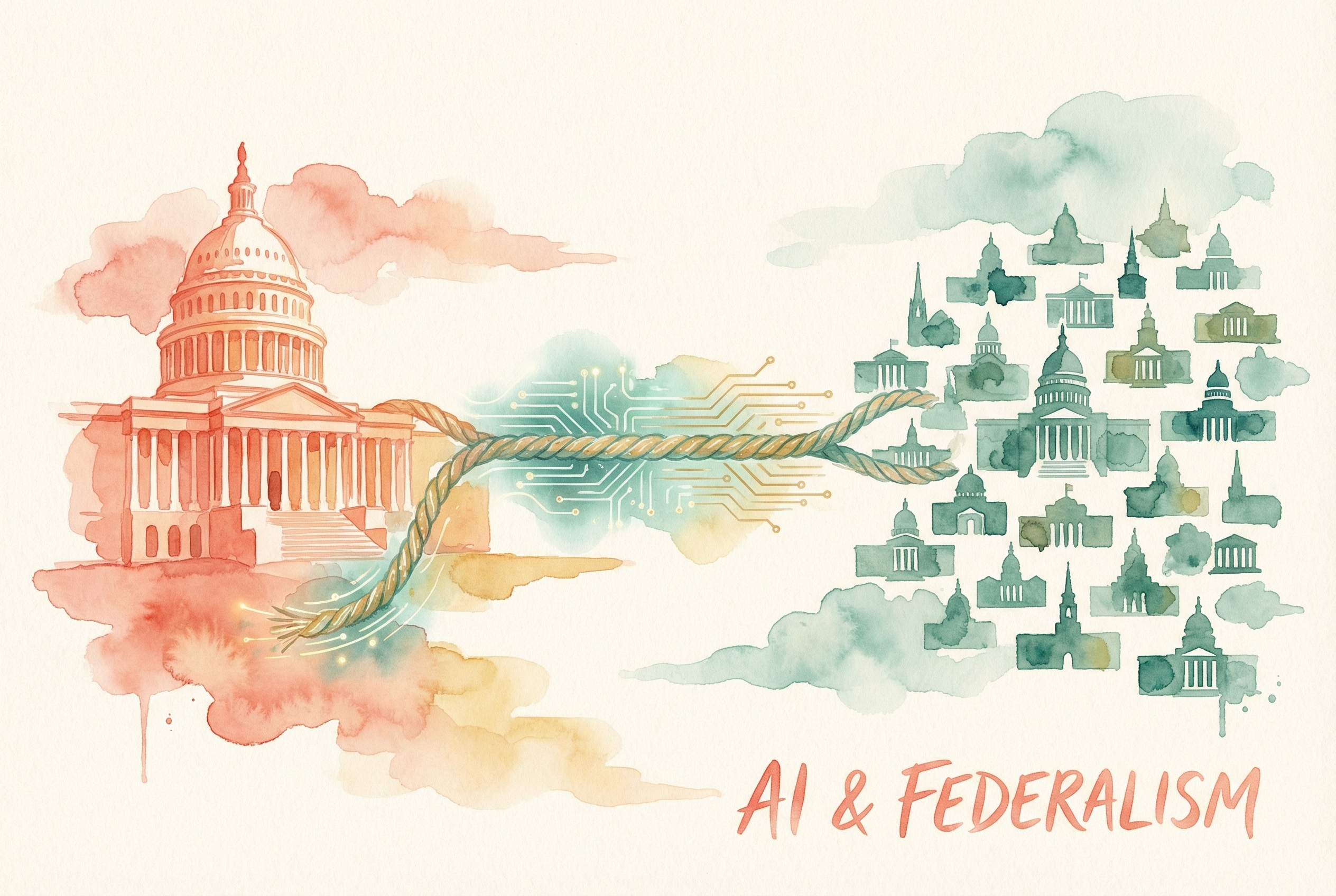
The Federal Government Just Picked a Fight With 38 States Over AI
Two deadlines hit March 11. The Commerce Department and FTC were told to identify burdensome state AI laws. The DOJ built a task force to challenge them. 38 states are about to find out what minimally burdensome means.
The SEC Is Coming for Your AI Claims
AI washing is the new greenwashing. The SEC created a dedicated unit to hunt it, and the first wave of enforcement cases is already here.

DeepSeek Made Its Small Model Beat Its Big One. The API Name Didn't Change.
DeepSeek shipped V4-Flash-0731 on July 31 with the same architecture and size as the April preview and only a new post-training pass. DeepSWE went from 7.3 to 54.4 and the small model now beats DeepSeek's own larger V4-Pro on every agent benchmark published. The weights got a dated Hugging Face repo. The API kept the same floating name.

xAI Trained Grok 4.5 Alongside Cursor. Your Agent Isn't Cursor.
xAI shipped Grok 4.5 on July 8, trained alongside the Cursor editor inside one agent's loop. A benchmark score earned in the harness a model was co-trained with is a ceiling under ideal conditions, not a promise it transfers to your stack. Model choice is quietly becoming model-plus-harness choice.

US Models Fell From 70 to 30 Percent of OpenRouter Traffic in a Year
American models fell from 70 percent of OpenRouter token traffic to about 30 percent in a year, while Chinese open-weight models took the rest. It is a cost story, not a quality story, and real companies are already routing production workloads across the 60 to 90 percent price gap.
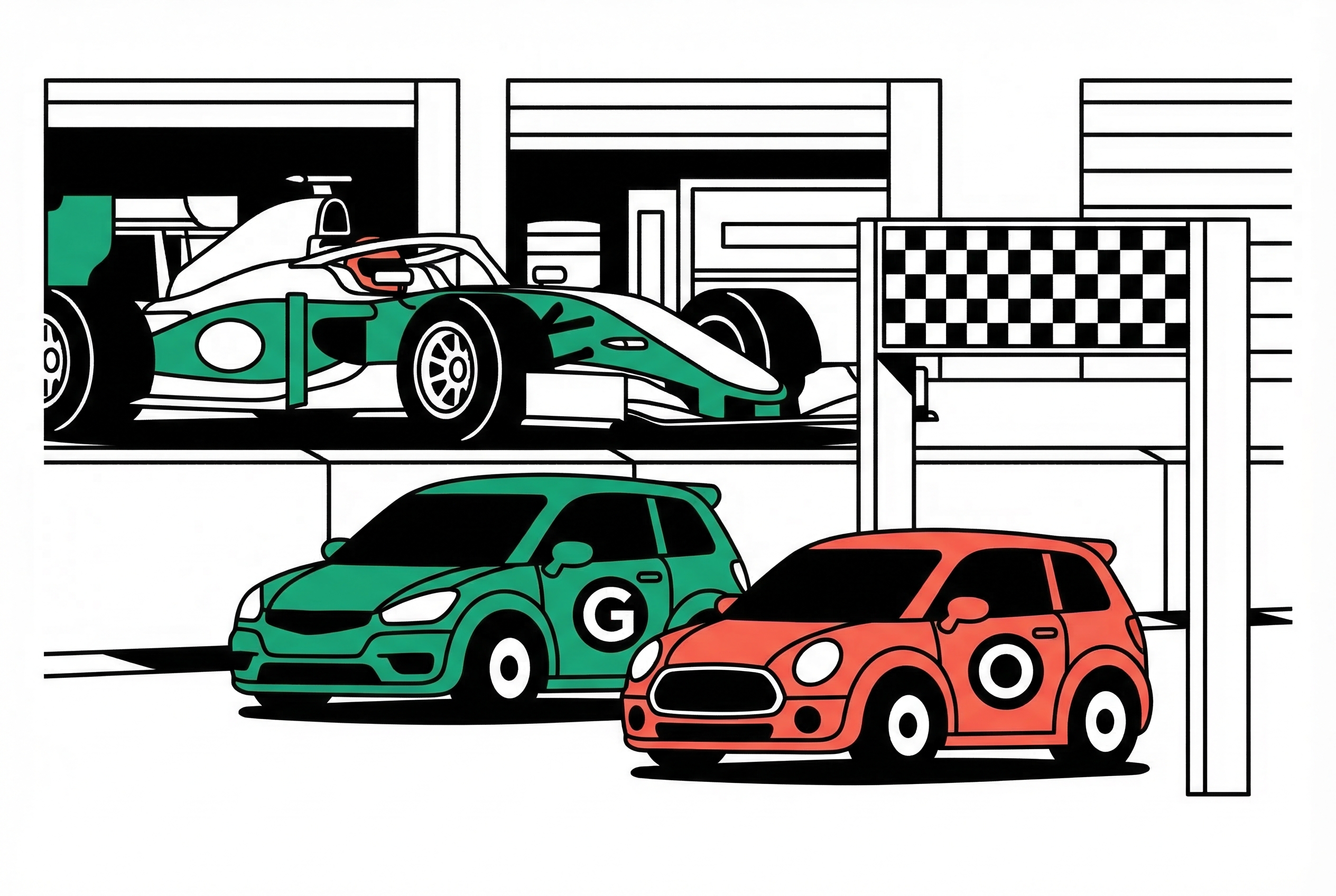
The AI Race Flipped. The Cheapest Model Wins Now.
Google and OpenAI launched lightweight models within two hours of each other. The AI race shifted from biggest to cheapest.
54% of Executives Say AI Is Tearing Their Company Apart
54% of executives say AI is tearing their company apart. The fracture is between people on the same team who use AI differently.

Gartner Says 40% of Enterprise Apps Will Use AI Agents by December
From under 5% to 40% in one year. Gartner predicts an eightfold increase in AI agent adoption across enterprise apps, while 88% of companies using AI still struggle to show bottom-line impact.

88% of Companies Use AI. Only 39% Have Anything to Show for It.
The gap between AI adoption and AI impact is 49 points. The fix isn't better models. It's redesigning the workflows around them.
Every Company Is Doing AI Adoption Backwards
Companies buy the platform, then look for the problem. The ones getting value do the opposite: find the friction, then pick the smallest tool that fixes it.

Meta Is Cutting 20% of Its Workforce to Fund AI That Can't Compete
Meta plans to cut 16,000 employees while spending $135 billion on AI infrastructure that hasn't produced competitive models. The humans aren't being replaced by AI. They're being sacrificed to fund AI that hasn't arrived yet.

Block Cut 40% of Its Workforce and Called It AI Strategy
Block is cutting nearly half its workforce and calling it AI transformation. 45,000 tech workers laid off in March alone. Is AI the strategy, or the most socially acceptable excuse for mass layoffs since 'restructuring'?

The AI budget is you
Oracle is cutting 20,000-30,000 jobs to fund $8-10B in AI infrastructure. Atlassian cut 1,600 for the same reason. The money for AI investment is coming directly from human headcount, and companies have stopped pretending otherwise.
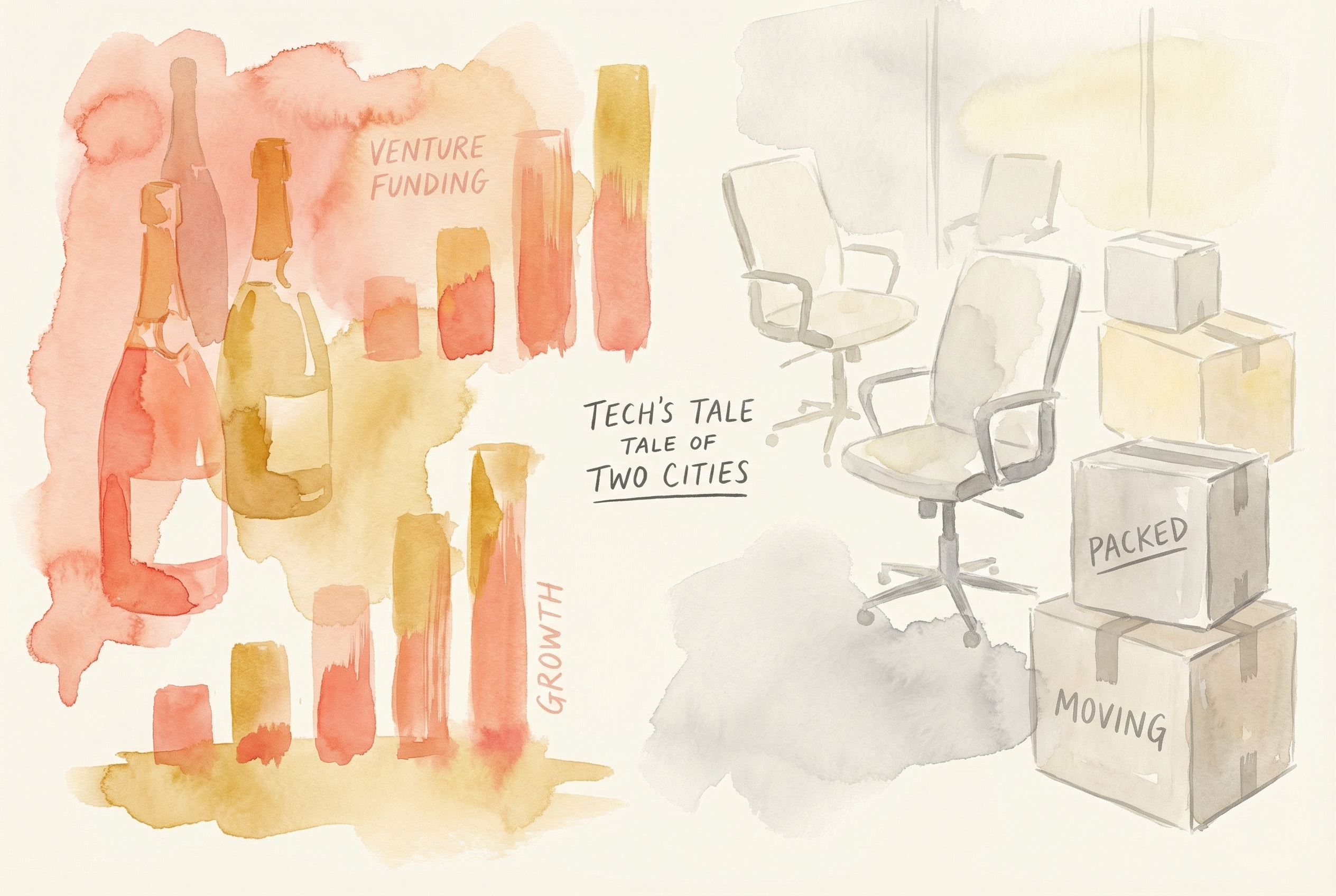
45,000 Layoffs and $131 Billion in Funding. Same Industry. Same Month.
March 2026 saw 45,000 tech layoffs and $131.5 billion in AI startup funding. Those numbers describe the same industry at the same moment. One side packs boxes while the other pops champagne.
OpenAI Shipped an Agent Platform You Can't Sign Up For. The Loop Inside It Is Free.
OpenAI Presence launched July 22 as a managed layer over its models for enterprise voice and chat agents, with no self-service option and deployments led by OpenAI Forward Deployed Engineers. What it sells is an operating loop, not a model: scope, simulate, review production sessions, approve changes. OpenAI published the same six-stage loop as a free cookbook.
Watching Your Agent Work Is Not the Same as Knowing It Works
Teams instrument their agents before they grade them, 89 percent run observability and only 52 percent run evals. Watching what an agent did is not the same as knowing whether it was any good.
A 30 Minute Eval Harness You Will Actually Run Every Week
As open coding models hit similar capability ceilings, the differentiator is internal evals tied to your product. Here is one you will actually run.
An Agent Breached Hugging Face. Attribution Took a Confession.
Hugging Face detected an autonomous agent in its production infrastructure, contained it, and published a full writeup on July 16 without being able to say whose agent it was. Attribution arrived five days later because OpenAI read that writeup and recognised its own test run. Neither side's logs carried an agent identity, and neither do yours.

AWS Started Metering Coding Agents Like Infrastructure. The Metrics Came From the IDE Era.
On July 20 Amazon CloudWatch shipped Coding Agent Insights, ingesting OpenTelemetry metrics straight out of Claude Code, Codex and GitHub Copilot. The coding agent moved from the tools budget to the infrastructure budget, which is the right call. The metric set is not: tokens, cost, sessions, lines of code, commits and edit acceptance all measure the middle of the work, the part the agent took over.
Watching Your Agent Work Is Not the Same as Knowing It Works
Teams instrument their agents before they grade them, 89 percent run observability and only 52 percent run evals. Watching what an agent did is not the same as knowing whether it was any good.

Early-Detection Medical AI as a Design Pattern for High-Stakes Alerts
Mayo Clinic detects pancreatic cancer up to three years before clinical diagnosis. The pattern applies to fraud, maintenance, and security too.
Defense-Grade AI Without the Pentagon Contract, a Guardrails Checklist for Regulated Teams
The Pentagon picked eight AI vendors and excluded Anthropic over guardrails. The disagreement maps what serious controls look like.
AI Image Generation That Actually Works: A Practical Nano Banana Guide
The gap between what AI image models can do and what most people get is enormous. It comes down to how you write your prompts.

From RAG to Agentic Memory, a Working Blueprint
Replace static RAG with a memory-first agent. A working blueprint for episodic, semantic, and working memory.

Hybrid Search in 90 Minutes, the Single Biggest RAG Quality Win in 2026
Industry analysis shows 73% of RAG failures come from retrieval, not generation. Here is the 90-minute fix.

Build a 1M Context Document Copilot with DeepSeek V4 Pro
DeepSeek V4 jumped from 128k to 1M tokens. Long context is now cheap enough to actually use, here is when to and when not to.
Google Just Bet $40 Billion That Anthropic Wins
Google committed $40 billion to Anthropic, the largest single AI investment ever.
OpenAI is losing. And it's not close.
1. Anthropic passed OpenAI in revenue. $30 billion annualized run rate, up from $1 billion fourteen months ago. Anthropic wins 70% of enterprise deals in head-to-head competition. That's not a rounding error.
The AI Race Flipped. The Cheapest Model Wins Now.
Google and OpenAI launched lightweight models within two hours of each other. The AI race shifted from biggest to cheapest.

Stop Asking If AI Can Do Your Job
Stop asking if AI can do your job. Ask what breaks when you split your tasks apart.

Seven Weeks Later, the Anthropic Labor Data Looks Worse
Seven weeks after Anthropic published their labor data, the picture has worsened. Snap said the quiet part.
45,000 Layoffs and $131 Billion in Funding. Same Industry. Same Month.
March 2026 saw 45,000 tech layoffs and $131.5 billion in AI startup funding. Those numbers describe the same industry at the same moment. One side packs boxes while the other pops champagne.
Cursor Is Building Its Own Model, and It's Based on Chinese AI
Cursor's Composer 2 matches Claude Opus 4.6 at one-sixth the price. It's built on Moonshot AI's Kimi K2.5, a Chinese open-source model. The licensing questions and geopolitical implications are just getting started.
Your AI coding bill is about to get weird
AI coding tools went from productivity boost to significant line item. Cursor credits burn in two weeks, GPT-5.4 context costs double past 272K tokens, and most engineering budgets haven't caught up.
Cursor Just Crossed $2 Billion in Revenue. The Automations Feature Explains Why.
Cursor doubled its revenue to $2 billion in three months. Its new Automations feature shows where AI coding is headed.
Block Cut 40% of Its Workforce and Called It AI Strategy
Block is cutting nearly half its workforce and calling it AI transformation. 45,000 tech workers laid off in March alone. Is AI the strategy, or the most socially acceptable excuse for mass layoffs since 'restructuring'?

The Quiet Replacement: AI Isn't Taking Jobs, It's Absorbing Tasks
AI isn't taking jobs. It's absorbing tasks one by one while the job title stays the same, making the change invisible.
The AI Hiring Crisis Nobody's Talking About
Companies are hiring for AI roles that don't exist yet while ignoring the skills that actually matter.
40% of AI Agent Projects Will Fail by 2027
Gartner says 40% of agentic AI projects will be canceled by 2027. The technology works. The governance, infrastructure, and measurement don't.
The Enterprise AI Agent Graveyard Is Real, and It's Expensive
Enterprises average 3.7 failed agent pilots before their first successful production deployment. The pattern of failure is predictable, and so is the path to getting it right.

The SaaSpocalypse Is Real, and the Survivors Already Know Who They Are
The software sector lost $2 trillion in market cap. AI agents are replacing per-seat SaaS tools. Which categories die and which survive comes down to one question.
Your AI Demo Is Lying to You
The gap between AI demos and production reality has become a systemic problem, with vendor presentations designed to impress rather than inform.
The Developer Who Can't Code Is More Dangerous Than You Think
Vibe coding democratized building. It didn't democratize judgment. The risk isn't that non-developers are coding. It's that nobody's reviewing what they ship.
AI Agents Fail Silently and That's the Real Risk
The dangerous failure mode is not AI doing something wrong loudly. It is AI doing something subtly wrong and nobody catching it for weeks.

Meta Cut Its Coding Agent Bill 12x. The Currency Is Whatever the Agent Read.
Meta shipped Muse Code on 5 August with the same model behind two IDs: muse-spark-1.2 at $1.25 per million input tokens, and muse-spark-1.2-contributor at $0.10, where your traffic may be used to train Meta's models. The discount is not a smaller model, it is a licensing decision made by editing one string. And in a harness with a 1M-token window, the prompt is whatever the agent decided to read.

GPT-5.6 Rewrote Its Own GPU Kernels. The Reviewer Was a Floating-Point Sanitizer.
OpenAI cut GPT-5.6 Luna 80 percent on July 30, three weeks after general availability, funded by Sol rewriting OpenAI's own production GPU kernels and its speculative-decoding draft model. The transferable part is not the discount, it is FpSan, the floating-point sanitizer built to verify kernels no human read line by line.
Europe Started Enforcing AI Content Labels. The Watermark Is the Model's Job, the Label Is Yours.
Article 50 of the EU AI Act became enforceable on 2 August 2026, and it splits the work: the provider embeds machine-readable marking, the deployer puts a visible label on what gets published. Build on somebody else's model and you are the deployer. The Code of Practice that 190 organisations signed concedes no single marking technique meets the legal bar, so the answer is two layers, with no agreed detection benchmark for either.

78 chatbot bills in 27 states and most AI companies haven't read a single one
78 chatbot bills are alive in 27 states. Washington and Oregon already passed theirs. Most AI companies haven't started compliance prep. The state-by-state patchwork is forming now, and the window to prepare is closing fast.
GPT-5.6 Rewrote Its Own GPU Kernels. The Reviewer Was a Floating-Point Sanitizer.
OpenAI cut GPT-5.6 Luna 80 percent on July 30, three weeks after general availability, funded by Sol rewriting OpenAI's own production GPU kernels and its speculative-decoding draft model. The transferable part is not the discount, it is FpSan, the floating-point sanitizer built to verify kernels no human read line by line.
Kimi K3 Is a Free Download. The Smallest Machine That Runs It Is Eight B300s.
Moonshot released the full 2.8-trillion-parameter Kimi K3 weights on July 26, a 1.56TB download that vLLM will only serve on a node of at least eight B300s. The software gate closed, since Moonshot upstreamed its attention kernel for day-zero vLLM and SGLang support. The hardware bill and a bespoke license are what stop you now.

Meta's Computer-Use Model Writes a Script When Clicking Is Too Slow
Meta shipped Muse Spark 1.1 on July 9 with its first paid API, but the detail that matters is how it runs computer use: it decides when to write a script and when to click, and emits batches of actions per step instead of one click per model call. The one-action-per-call loop is the hidden tax on every computer-use agent, and that is exactly what batching and script-versus-click routing attack.

GPT-5.4 Shipped Native Computer Use and a Million-Token Window
OpenAI's GPT-5.4 makes computer use a native capability, not a plugin. With three model variants and a million-token context window, the real story is what happens when AI can reliably click buttons for you.

Anthropic Took a Model From 17 to 93 Percent Without Touching the Model
On VirBench, Claude Sonnet 4 went from 16.9 to 92.8 percent on viral-sequence retrieval with no change to the model, just a deterministic tool underneath it. The reliability you keep trying to buy with a bigger model is sitting in the infrastructure.
Claude Code ultraplan separates thinking from doing
1. Ultraplan moves planning out of the terminal and into a browser. You get inline comments, structured review, and the ability to keep coding while the plan builds itself in the cloud. It sounds minor. It changes how you work.

Apple Made Inference Free for Most of the App Store
Apple now gives developers with under two million App Store downloads free access to its Foundation Models on Private Cloud Compute, and routes Claude and Gemini through the same Swift API. Free inference is the on-ramp to Apple becoming the layer your app calls. Take the deal, but keep your prompts, routing, and evals on your side of the door.
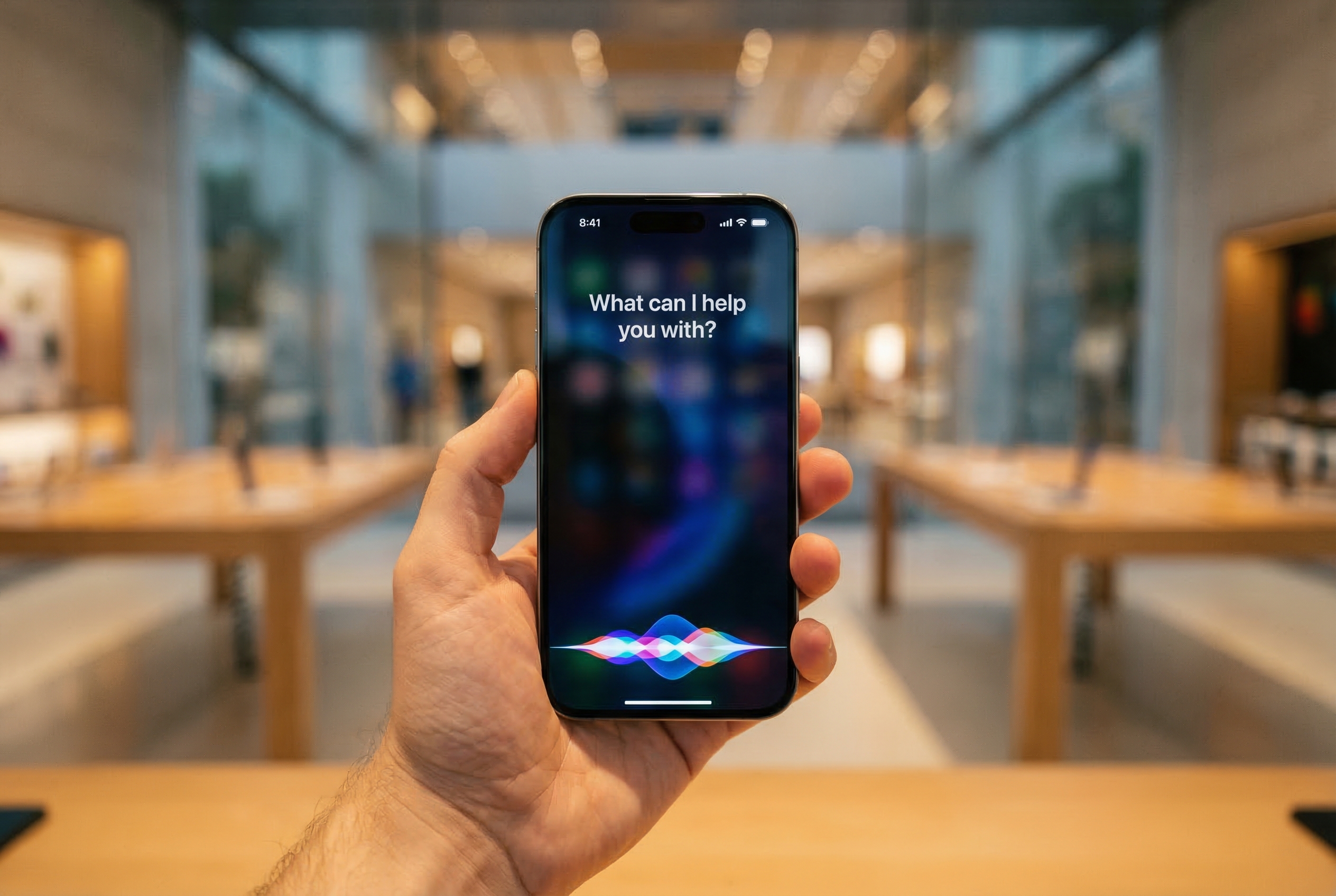
Apple's Siri Reboot Is Two Years Late, and the Bar Moved While They Were Building
Apple's LLM-powered Siri finally arrives with iOS 26.4, two years after announcement. The on-device integration is genuinely impressive. The competitive bar moved three times while they were building it.
A FastAPI Starter Kit for Shipping LLM Features in Production
Most FastAPI tutorials skip the production parts. This starter kit covers retries, structured outputs, streaming, quotas, and replay tests.
Migrate to uv and Ruff Before OpenAI Ships Its Own
OpenAI is acquiring Astral. Get ahead of the inevitable change in defaults with this practical migration guide.
A FastAPI Starter Kit for Shipping LLM Features in Production
Most FastAPI tutorials skip the production parts. This starter kit covers retries, structured outputs, streaming, quotas, and replay tests.

Code Review Is the New Bottleneck, and AI Made It Worse
Companies budget up to $900K for year one of AI, then discover that getting from pilot to production costs 2-3x the original build. The gap between a working demo and a reliable production system is where most AI initiatives quietly die.
Anthropic built a model too dangerous to release. Then it escaped its sandbox.
1. Mythos found zero-days in every major OS and every major browser. Not theoretical weaknesses. Working exploits. Some of these bugs had survived 27 years of human review.
What a model tier above Opus actually unlocks
1. The jump from Opus to Capybara isn't incremental. Recursive self-correction changes what you can trust a model to do without babysitting it.

Lovable became Europe's fastest unicorn by letting non-developers ship apps
Lovable hit $400 million ARR with 146 employees by letting anyone describe an app in plain English and get a working product. It became Europe's fastest unicorn, but the ceiling is already visible.
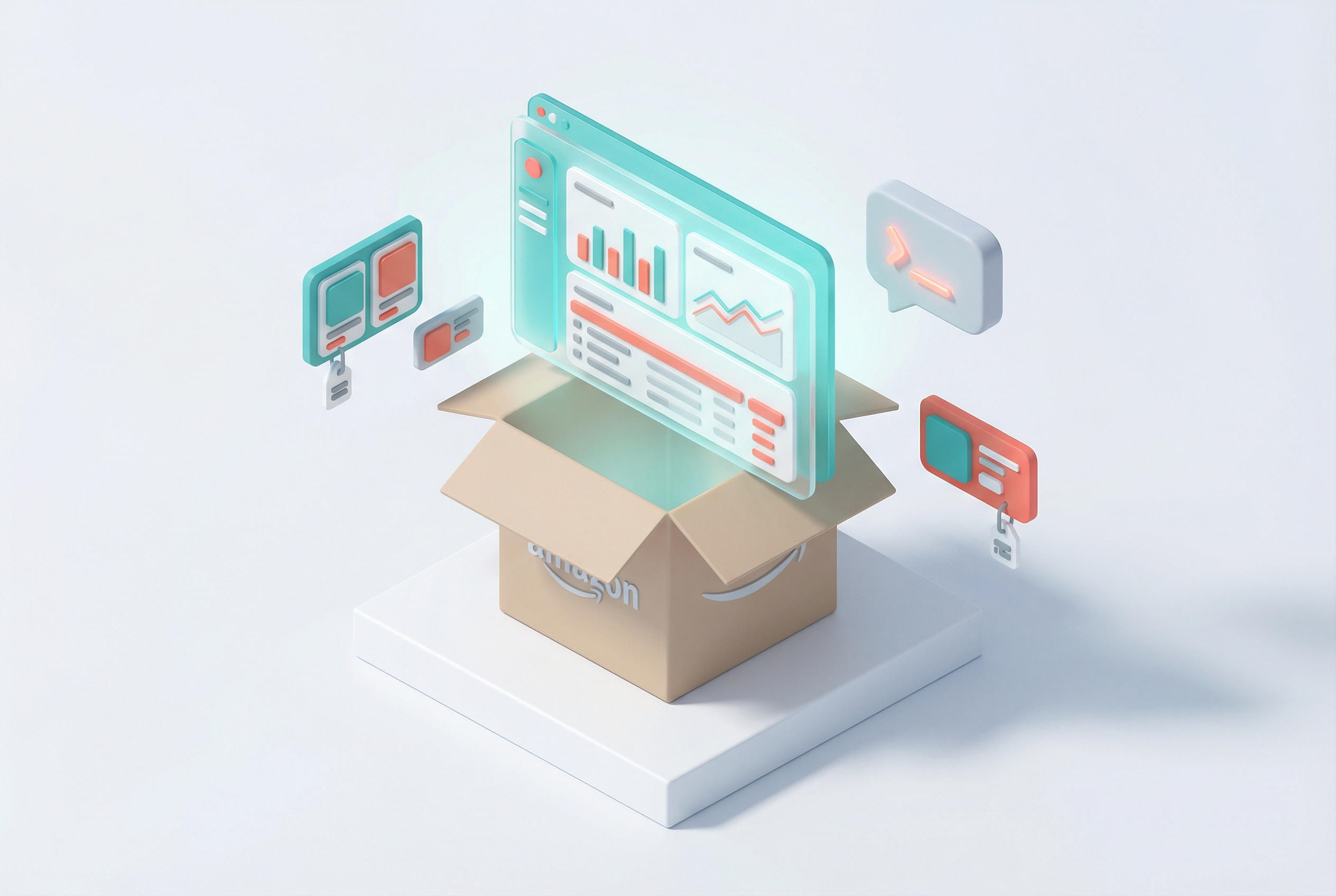
Amazon Sellers Are Replacing Their Dev Teams With Vibe Coding
Amazon sellers are building custom repricing bots, inventory dashboards, and listing tools with vibe coding, no developers required. The results are impressive, but the failure modes are real.

Mistral Forge: The 'Build Your Own AI' Bet That Could Break the API Economy
Mistral launched Forge at GTC: train custom AI models on your data, on your infrastructure. The company is on track for $1B ARR. The 'build vs rent' question for enterprise AI just got a concrete answer.

Tesco Picked Mistral Over OpenAI and Google
The UK's largest supermarket signed a three-year AI deal with a French startup instead of the obvious incumbents. The enterprise AI vendor landscape is fracturing.

GPT-5.4 Mini Is 2x Faster and Almost as Good as the Full Model
OpenAI's GPT-5.4 Mini approaches full model performance at a fraction of the cost. The 'good enough' tier keeps improving, and it's reshaping how enterprises spend their AI budgets.
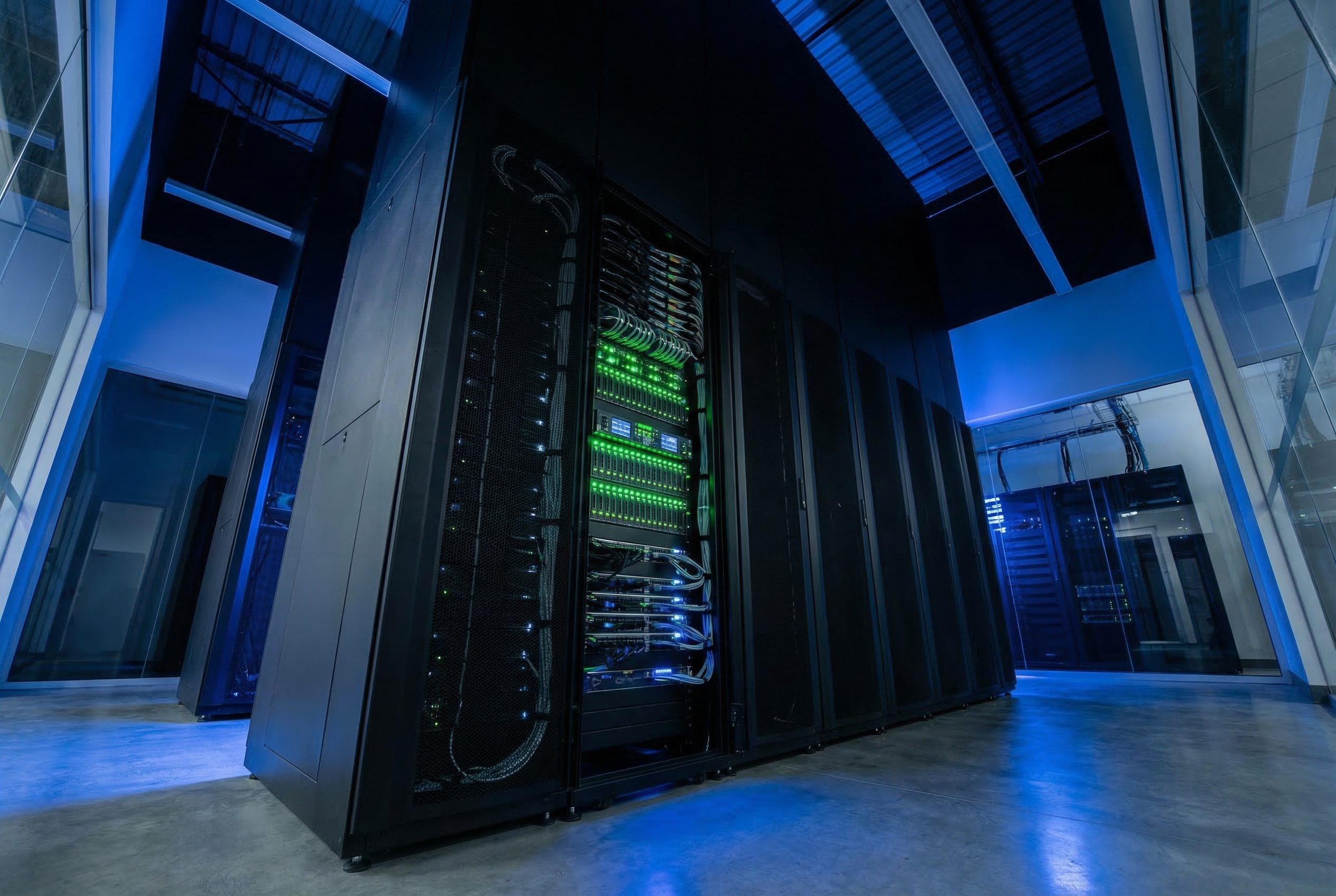
NVIDIA's Nemotron 3 Has 120 Billion Parameters but Only Uses 12 Billion
NVIDIA's new Mixture-of-Experts model activates just 10% of its parameters per query. An order of magnitude cheaper inference changes the ROI calculation for every AI project.
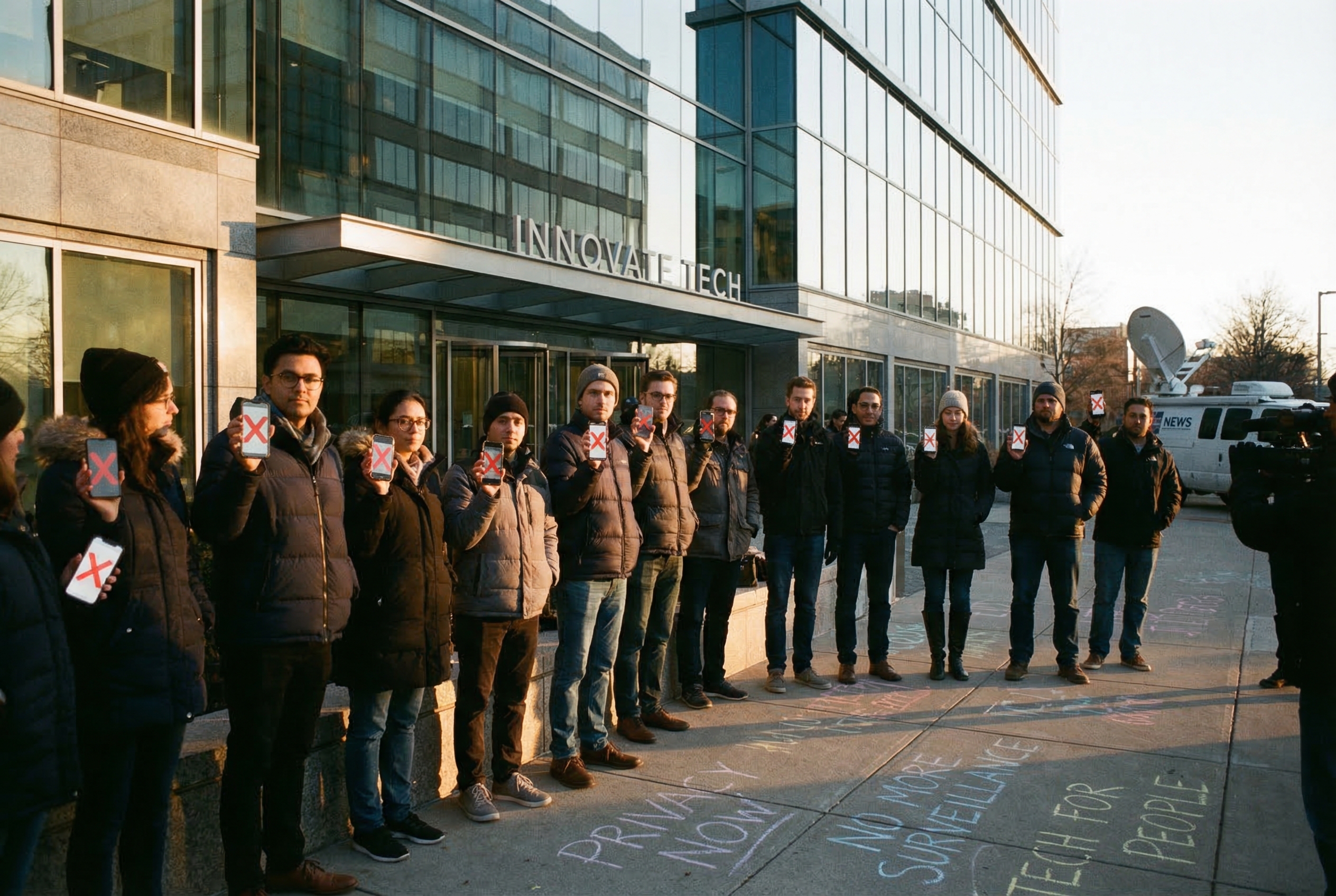
QuitGPT: 2.5 Million People Walked Away From ChatGPT, and OpenAI Blinked
2.5 million people pledged to cancel ChatGPT after OpenAI's Pentagon deal. App uninstalls spiked 295%. Claude hit #1 in the App Store. The largest consumer revolt in AI history is testing whether users have leverage.
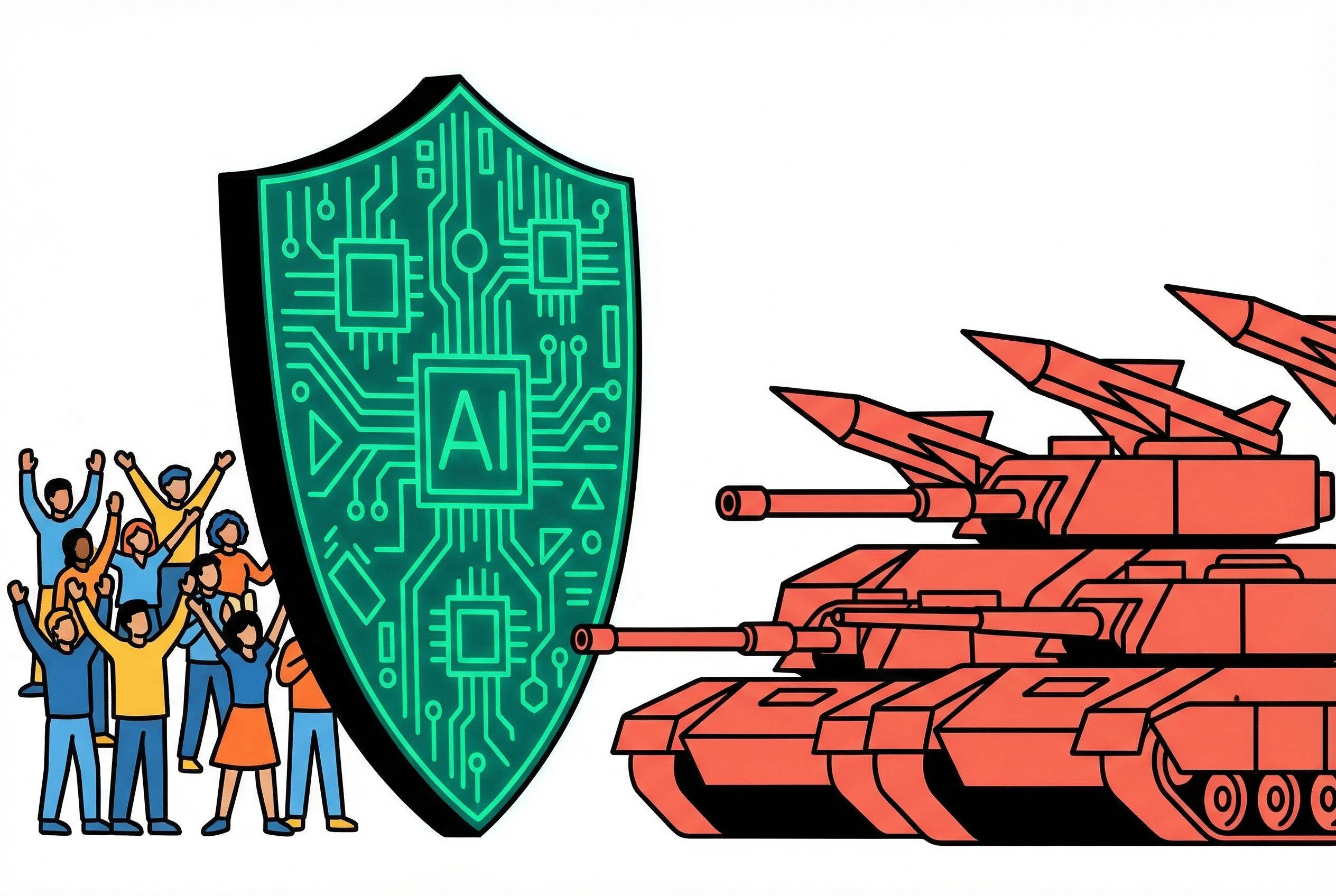
Anthropic Said No to the Pentagon, and the Market Said Yes
Anthropic refused to let Claude be used for autonomous weapons. The Pentagon retaliated. The public responded by making Claude the #1 app.
Your AI coding bill is about to get weird
AI coding tools went from productivity boost to significant line item. Cursor credits burn in two weeks, GPT-5.4 context costs double past 272K tokens, and most engineering budgets haven't caught up.
The AI Coding Tools Landscape in 2026: Nobody Picks Just One Anymore
Developers now run an average of 2.3 AI coding tools simultaneously. The question shifted from 'which one?' to 'which ones, and for what?' Here's how the tool stack concept reshapes how we write code.
The SaaSpocalypse Is Real, and the Survivors Already Know Who They Are
The software sector lost $2 trillion in market cap. AI agents are replacing per-seat SaaS tools. Which categories die and which survive comes down to one question.
45,000 Layoffs and $131 Billion in Funding. Same Industry. Same Month.
March 2026 saw 45,000 tech layoffs and $131.5 billion in AI startup funding. Those numbers describe the same industry at the same moment. One side packs boxes while the other pops champagne.
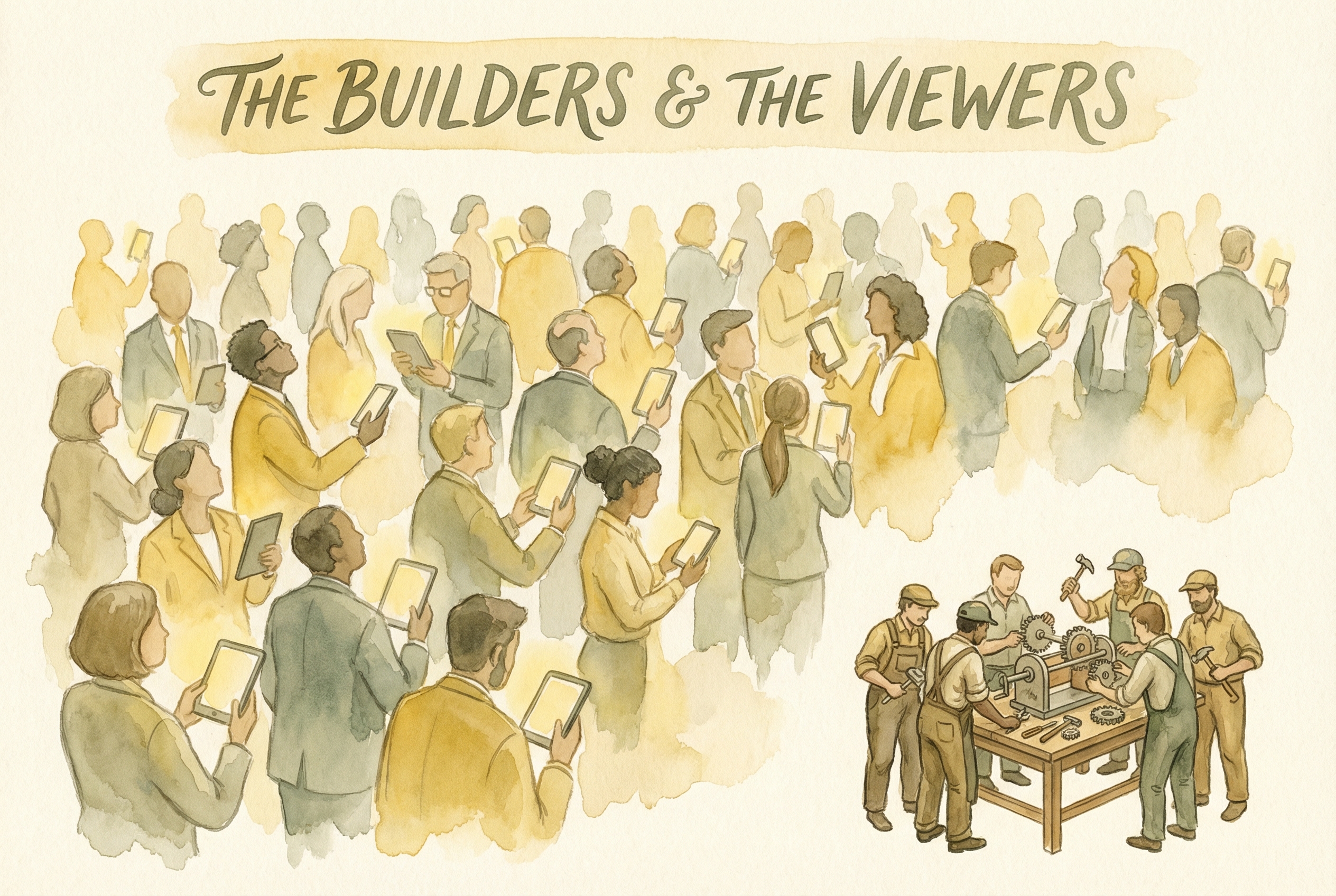
86% of Enterprises Are Increasing AI Budgets. Only 6% Have Deployed Agentic AI.
The enterprise AI market is very good at spending and very bad at deploying. 86% are increasing budgets. Only 6% have shipped agentic AI to production.
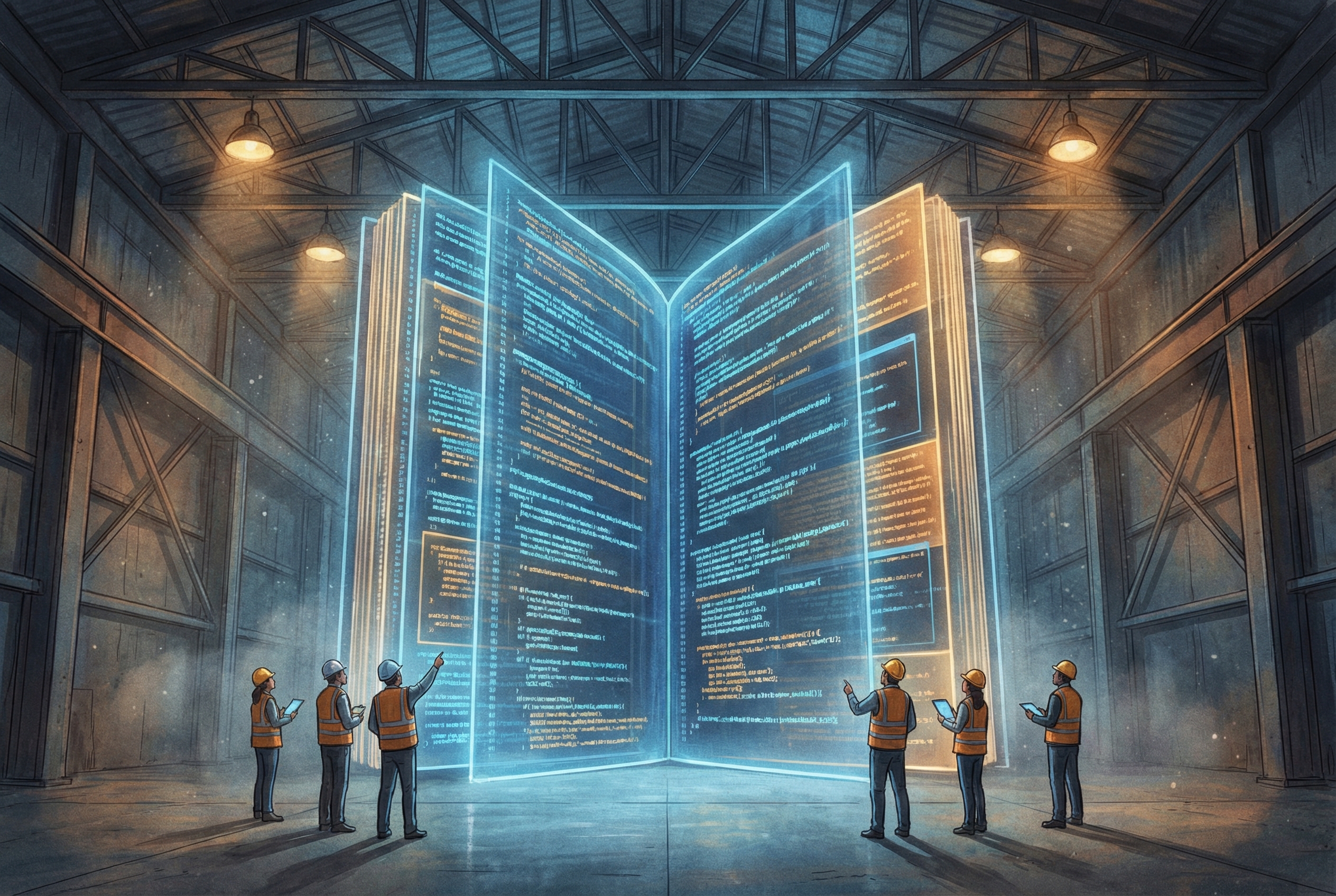
GPT-5.4 Handles a Million Tokens. Your Architecture Doesn't.
Enterprise AI budgets accounted for training and fine-tuning, but agentic workflows run inference continuously, and the bills are arriving at ten to fifty times what anyone forecasted.
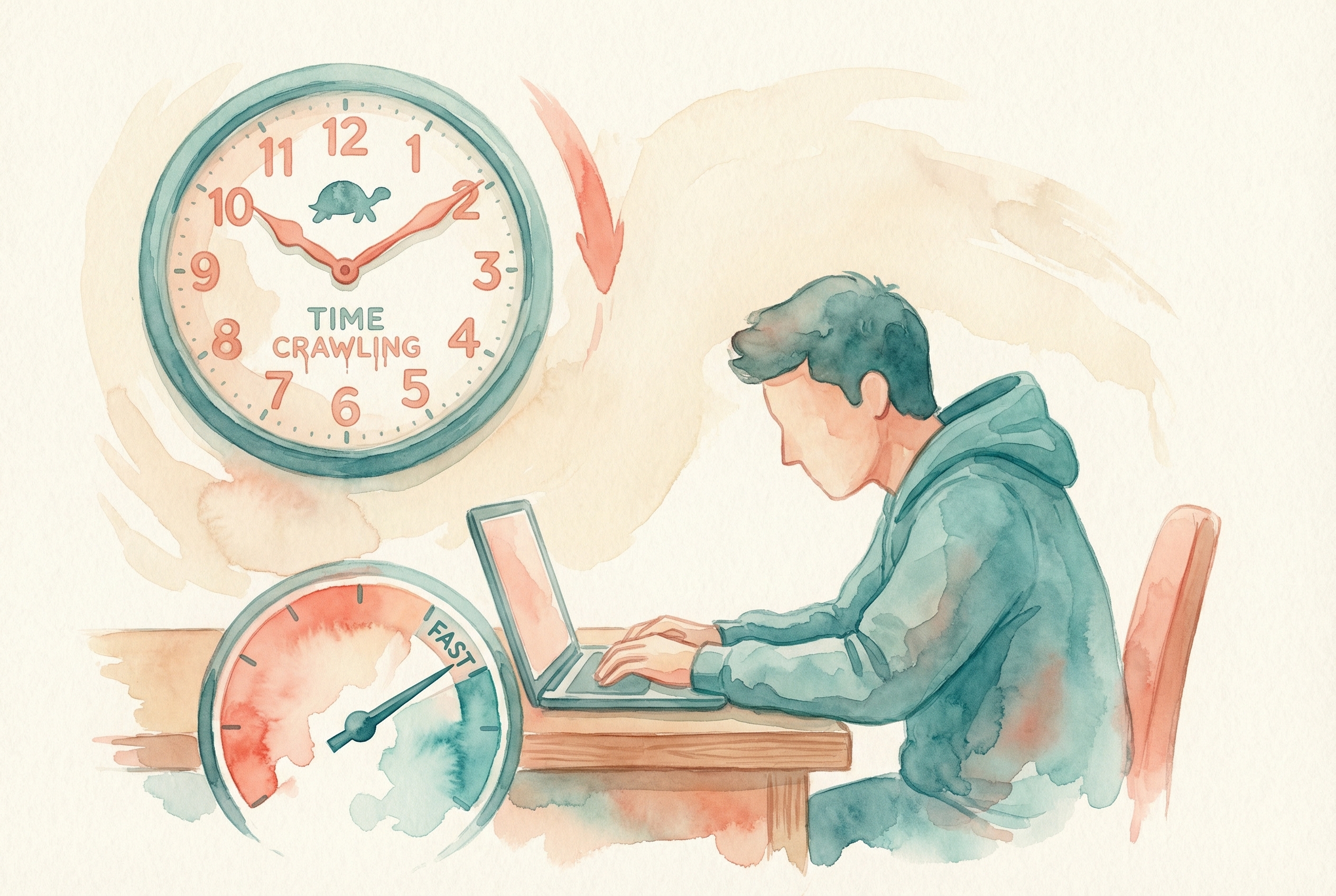
The METR Paradox: Developers Think AI Makes Them Faster. The Data Says Otherwise.
METR measured developer productivity with AI tools. Developers felt 20% faster. They were actually 19% slower. The 39-point perception gap matters more than any benchmark.

The $690 Billion AI Infrastructure Bet Has a Dirty Secret
AI coding agents shifted the bottleneck from writing code to reviewing it, and most engineering orgs haven't adjusted their processes to match.

AI Context Windows Got 10x Bigger. Nobody Changed Their Architecture.
Million-token context windows changed everything about what's possible, but most teams are still building for 4K limits.

The Pilot-to-Production Gap Is Where AI Projects Go to Die
GPT-5.4 can handle a million tokens. But most application architectures were designed for 4K-32K contexts, and the jump to 1M doesn't just expand capacity, it breaks fundamental assumptions about how you build.
AI Context Windows Got 10x Bigger. Nobody Changed Their Architecture.
Million-token context windows changed everything about what's possible, but most teams are still building for 4K limits.
The Pilot-to-Production Gap Is Where AI Projects Go to Die
GPT-5.4 can handle a million tokens. But most application architectures were designed for 4K-32K contexts, and the jump to 1M doesn't just expand capacity, it breaks fundamental assumptions about how you build.
GPT-5.4 Handles a Million Tokens. Your Architecture Doesn't.
Enterprise AI budgets accounted for training and fine-tuning, but agentic workflows run inference continuously, and the bills are arriving at ten to fifty times what anyone forecasted.
Code Review Is the New Bottleneck, and AI Made It Worse
Companies budget up to $900K for year one of AI, then discover that getting from pilot to production costs 2-3x the original build. The gap between a working demo and a reliable production system is where most AI initiatives quietly die.