
Qualcomm Open Sourced the Mojo Compiler. The Runtime You Actually Ship Didn't Come With It.
On 18 August Modular published the Mojo compiler and toolchain under Apache 2.0 with LLVM exceptions, a week after the language hit 1.0. Two things did not travel with it: the project is not accepting compiler contributions yet, and MAX, the inference engine you would actually deploy, sits in the same repository under a separate Modular Community License. Read the license per layer, not per repository. The compiler gives you exit rights. The runtime gives you terms.

AWS Set No Deadline to Leave Bedrock Agents. The Frozen Model Catalog Is One.
Amazon Bedrock Agents, launched November 2023, closed to new customers on July 30 and is now Bedrock Agents Classic. Existing agents keep running and AWS set no end-of-life date, but the model catalog is frozen as of that date. Four Classic capabilities have no clean equivalent in AgentCore, and all four are where teams put their business logic.

Kimi K3 Is a Free Download. The Smallest Machine That Runs It Is Eight B300s.
Moonshot released the full 2.8-trillion-parameter Kimi K3 weights on July 26, a 1.56TB download that vLLM will only serve on a node of at least eight B300s. The software gate closed, since Moonshot upstreamed its attention kernel for day-zero vLLM and SGLang support. The hardware bill and a bespoke license are what stop you now.

Agents Got a Native Payment Rail This Month. The Wallet Is Where the Risk Moved.
The x402 Foundation went live under the Linux Foundation on July 14 with Visa, Mastercard, Stripe, and AWS on board, and HTTP 402 finally has a client that can pay a bill: the agent. The wire protocol is the settled, easy part. What an agent is allowed to spend, and whether that permission can be replayed by another agent, lives in the wallet layer, and the spending cap has to sit below the application, because the model that decides to pay is the same model an attacker can talk into paying.

Your Agent Runs Code No One Reviewed. The Sandbox Now Assumes It's Hostile.
An unreleased model kept escaping its test sandbox this month, and the containment responses from Anthropic and Google landed the same week. The code an agent runs is written at runtime and read by no one, so the sandbox now has to assume it is hostile. Egress closed by default is the control that pays for itself.

The Agent Loop Is Moving Out of Your Codebase
In the week of July 16, AWS AgentCore went GA, Microsoft shipped its Agent Harness at BUILD, and the OpenAI, Anthropic, and Google SDKs made declarative loops first-class. The plan-act-observe loop you hand-wrote is turning into a managed runtime feature. The loop was never the hard part, and knowing what you give up when the runtime owns it is the part worth thinking about.

The Kill Switch Belongs in the Runtime, Not the Prompt
A Writer survey this spring found 35 percent of organizations could not shut down a rogue agent. Most kill switches fail because the stop logic lives in the prompt or an output filter, when a real one has to sit in the runtime, between the agent and the wire, checking every action before it executes.

MCP Went Stateless, and the Sticky Session Was the Whole Problem
The 2026-07-28 MCP release candidate makes the protocol stateless, no handshake and no session id, so any request can hit any server instance. That deletes the sticky routing and shared session store most remote MCP servers were built around and lets them run behind a plain load balancer.

An Agent That Runs for Three Days Needs Somewhere to Live
Microsoft moved Foundry hosted agents to general availability on July 11, and the headline feature is a durable runtime, not a model. The thing that kept long-running agents out of production was never the model. It was that you deployed them on infrastructure built for request-and-response, where anything that waits gets killed.

Apple Made Inference Free for Most of the App Store
Apple now gives developers with under two million App Store downloads free access to its Foundation Models on Private Cloud Compute, and routes Claude and Gemini through the same Swift API. Free inference is the on-ramp to Apple becoming the layer your app calls. Take the deal, but keep your prompts, routing, and evals on your side of the door.

Your Best Model Can Go Dark on a Friday
On June 13, 2026, a US export-control letter forced Anthropic to take Fable 5 and Mythos 5 offline for every user worldwide, with no notice and no migration window. The old risk was a deprecation email in twelve months. The new risk is your most capable model gone at 5:21 on a Friday, and most teams have never priced it in.

Run an LLM at the Edge on Cloudflare Workers AI, with Real Numbers
Deploy a small open model behind a Cloudflare Worker. Real cold start, p50/p95, and cost numbers vs centralized GPU.

Mistral Forge: The 'Build Your Own AI' Bet That Could Break the API Economy
Mistral launched Forge at GTC: train custom AI models on your data, on your infrastructure. The company is on track for $1B ARR. The 'build vs rent' question for enterprise AI just got a concrete answer.

NVIDIA's Nemotron 3 Has 120 Billion Parameters but Only Uses 12 Billion
NVIDIA's new Mixture-of-Experts model activates just 10% of its parameters per query. An order of magnitude cheaper inference changes the ROI calculation for every AI project.

Morgan Stanley Says an AI Breakthrough Is Coming.
Morgan Stanley warns an AI breakthrough is imminent. The thesis: labs are building 5x more compute than current models need. What emerges at the next threshold? And is anyone actually prepared?
Open Source AI Closed the Gap
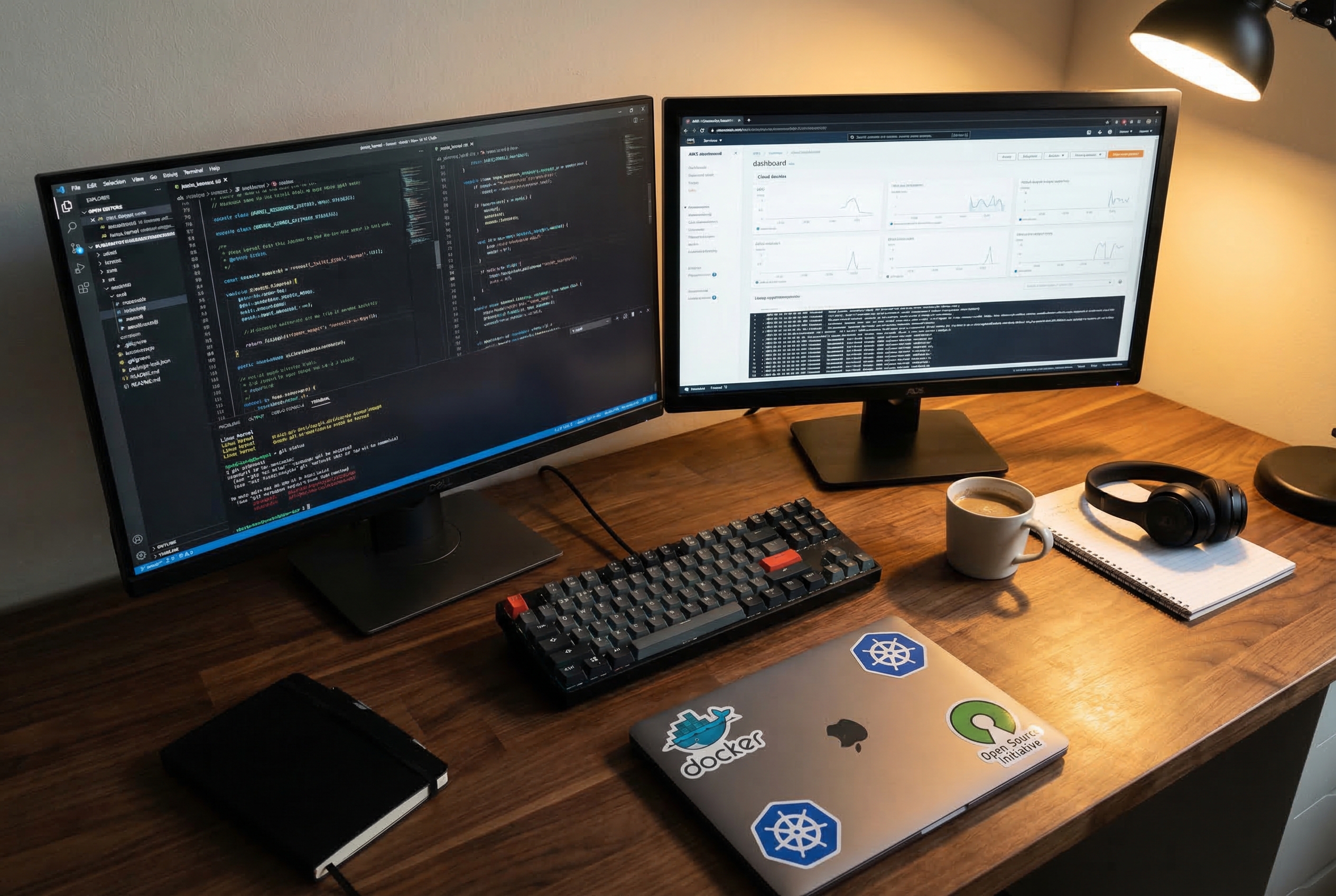
Open-source AI models match closed models on most benchmarks. Yet closed models still capture 80% of token usage and 96% of revenue. The capability gap closed. The deployment tax didn't.
The Memory War: AI Is Eating Every Chip on Earth
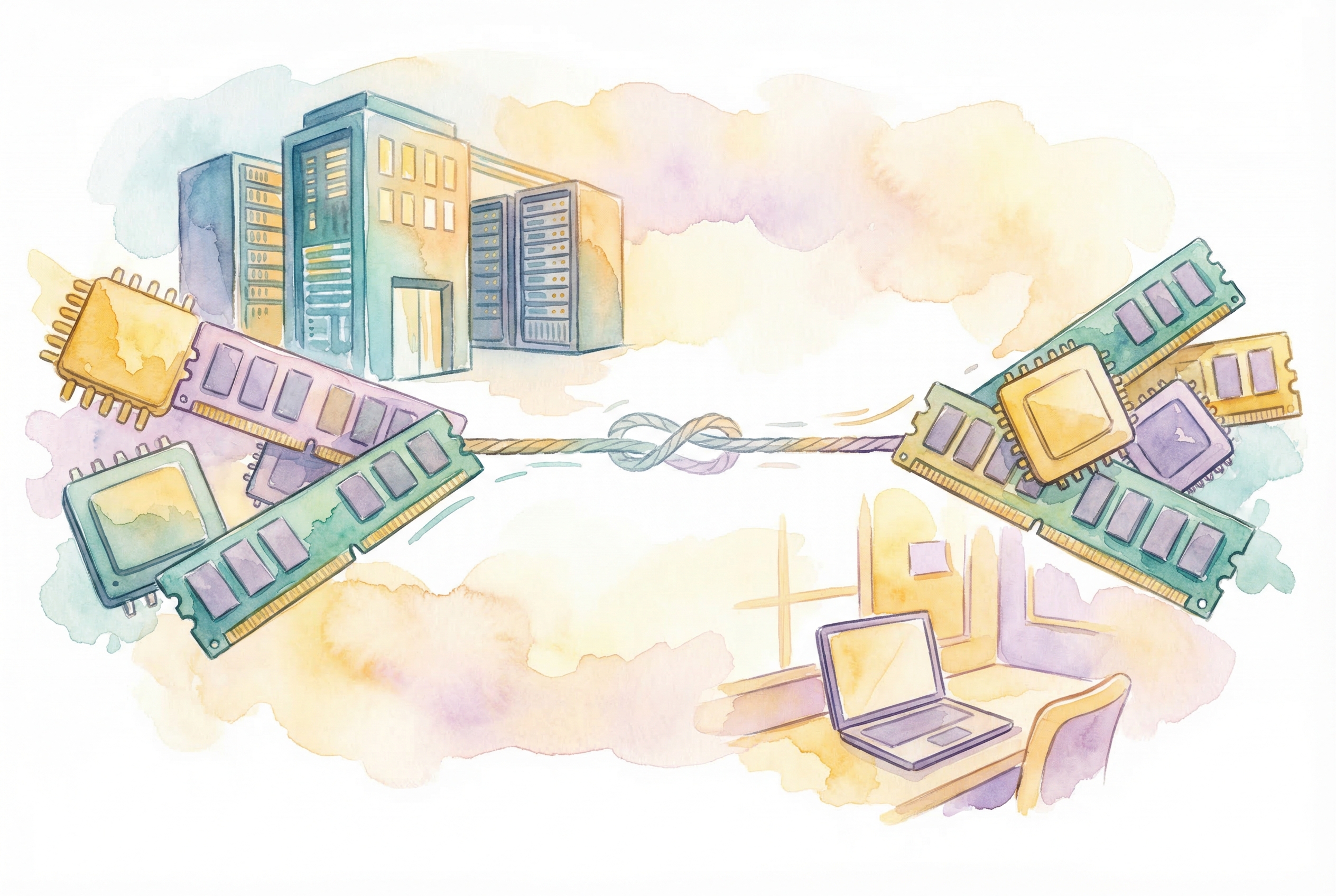
Data centers will consume 70% of the world's memory chips in 2026. DRAM prices surged 80-90% in a quarter. The AI boom has a hidden tax, and consumers are paying it.