- Microsoft has renegotiated its OpenAI partnership to remove a ban on building competing foundation models, four years before the original 2030 timeline.
- Mustafa Suleyman’s restructuring consolidates Copilot, enterprise AI, and foundation model work under a “superintelligence” push, signaling a major strategic shift.
- The Microsoft–OpenAI relationship is no longer an exclusive dependency; OpenAI is now just one model supplier among several as the frontier model landscape broadens.
- OpenAI’s massive new funding and higher valuation have reduced Microsoft’s leverage and increased the strategic risk of relying on a partner that also competes directly.
- Microsoft’s in-house models are expected to roll out first inside its own products and then as Azure enterprise options, giving customers an alternative to OpenAI APIs.

Mustafa Suleyman announced this week that he's merging Microsoft's Copilot organization under new leadership to "focus all my energy on our Superintelligence efforts." Read that sentence again. Microsoft's AI leader just said the word "superintelligence" in a corporate restructuring memo, and it wasn't a joke.
The restructuring lifts a ban on Microsoft building its own foundation models independently, a restriction that was part of the original OpenAI partnership and was supposed to run through 2030. Microsoft removed that restriction four years early. They didn't wait for the contract to expire. They renegotiated it out.
Microsoft is now building its own foundation models from scratch, expected to be available starting this year. The OpenAI partnership isn't dead, but it just became one option among several rather than the exclusive strategy.
What the partnership actually looked like
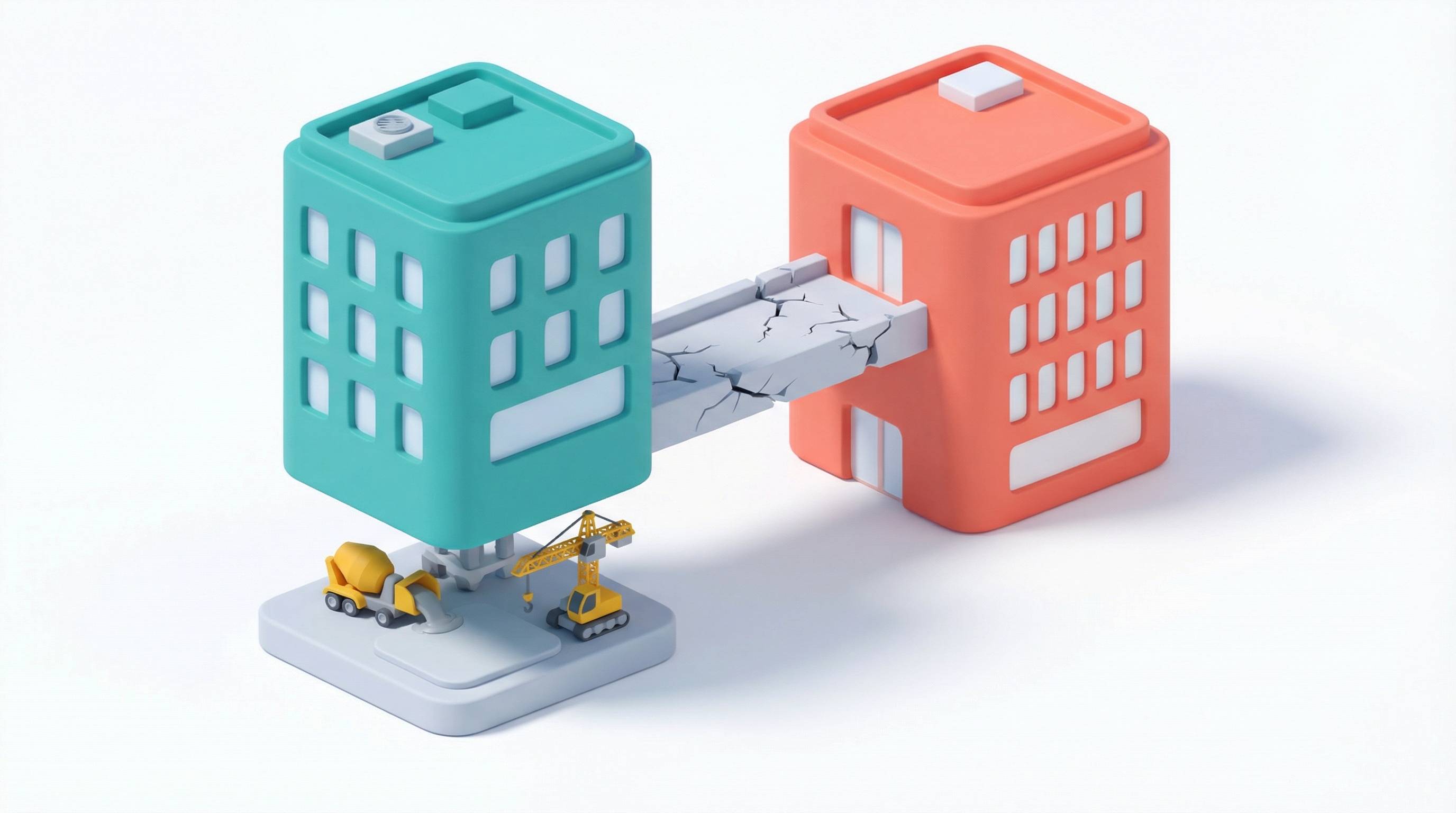
The original Microsoft-OpenAI deal was structured as a dependency. Microsoft invested $13 billion, got exclusive cloud hosting rights, and built its entire AI product strategy (Copilot, Azure AI, Bing Chat) on OpenAI's models. In exchange, Microsoft agreed not to build competing foundation models.
That structure made sense in 2023 when OpenAI was the clear frontier lab and Microsoft needed models fast. It makes less sense in 2026 when Claude, Gemini, Mistral, and open-source models are all competitive, and Microsoft is paying premium prices for API access to a partner that now competes with it directly.
| Then (2023) | Now (2026) |
|---|---|
| OpenAI had the only frontier model | 5+ labs at frontier level |
| Microsoft needed models immediately | Microsoft has built in-house AI talent |
| Exclusive partnership = competitive advantage | Exclusive dependency = strategic risk |
| $13B investment = cheap access | OpenAI raised $110B at $730B valuation, Microsoft's leverage declining |
The $110 billion raise OpenAI completed this month, at a $730 billion pre-money valuation with Amazon, Nvidia, and SoftBank as investors, changed the power dynamic. OpenAI isn't a Microsoft subsidiary that happens to be structured as a separate company. It's an independent entity with its own investors, its own ambitions, and a product roadmap that diverges more every quarter.
What Microsoft is actually building
The details are thin, but the direction is clear. Suleyman's restructuring puts foundation model development, Copilot products, and enterprise AI under unified leadership. The stated goal is "superintelligence," which in practice means models that can handle complex, multi-step reasoning tasks autonomously.
Microsoft has the ingredients: Azure's compute infrastructure, the talent they've hired over the past two years (including former OpenAI researchers), and the distribution through Office, Windows, Teams, and GitHub. What they haven't had is permission to use those ingredients to build their own model. Now they do.
The likely path is that Microsoft ships its own foundation models for internal products first (Copilot, Bing, Azure AI services), then offers them to enterprise customers as an alternative to OpenAI on Azure. The OpenAI partnership continues for customers who want it, but Microsoft's own models become the default for new products.
The enterprise calculation just changed
If you're an enterprise running AI workloads on Azure, you currently depend on OpenAI models through Microsoft's API. That dependency has a single point of failure: the OpenAI relationship. If pricing changes, if rate limits tighten, if OpenAI prioritizes its own products over the Azure API, you absorb the impact.
Microsoft building its own models reduces that risk. Enterprise customers get a second option without switching cloud providers. Microsoft controls pricing, availability, and how the models are optimized for enterprise workloads. It can't control any of those when the models come from a partner that's pulling away.
The practical question for enterprise AI teams is timing. Microsoft's own models won't match GPT-5.4 on day one. There will be a gap period where you're choosing between OpenAI's superior model and Microsoft's more integrated, potentially cheaper, more predictable option. That trade-off will define enterprise AI procurement decisions for the next 12-18 months.
Every platform company is reaching the same conclusion
Microsoft building its own models confirms what the rest of the industry already decided. Google builds Gemini for its own products. Apple partners with Google for Gemini while developing its own on-device models. Amazon invested in Anthropic but is also building models internally.
Every major platform company has reached the same conclusion: depending on a single external model provider is a strategic vulnerability, not a competitive advantage. The question isn't whether to build your own models. It's when, and how fast you can close the gap.
For OpenAI, this is the risk that was always baked into the Microsoft relationship. Microsoft was OpenAI's biggest customer, its biggest investor, and its primary distribution channel. Losing any of those roles weakens OpenAI's position. Losing all three, which is now a realistic scenario over the next 2-3 years, rewrites the company's economics entirely.
The AI industry is splitting into two tiers: platform companies that build their own models, and independent model providers (OpenAI, Anthropic, Mistral) competing for everyone else. That second tier is a smaller, harder market than the one that existed 18 months ago. And the business models built for the old market are about to get tested.
If you run AI workloads on Azure, start planning for a multi-model future: track when Microsoft’s first-party foundation models become available and compare them against OpenAI on cost, latency, and reliability. Build your applications with portability in mind (abstraction layers, model-agnostic prompts, evaluation harnesses) so you can switch providers if pricing or rate limits change. Also watch Microsoft’s product defaults in Copilot and Azure AI, because those choices will signal where long-term support and optimization are headed.