- Anthropic refused to let Claude be used for autonomous weapons or mass surveillance of American citizens, prompting the Pentagon to label it a “supply chain risk” and leading to two federal lawsuits alleging retaliation.
- Contrary to defense-tech conventional wisdom, the public rewarded Anthropic’s ethical boundary-setting with a surge in downloads and subscriptions, pushing Claude to #1 on the iPhone App Store.
- The episode suggests the consumer AI market is now large enough that taking a principled stand can generate more commercial upside than a major government contract—at least for companies with strong consumer-facing products.
- Anthropic’s stance was narrow rather than anti-government: it signaled willingness to work with the military while drawing lines around widely accepted legal and ethical constraints.
- The speed and concreteness of consumer behavior change indicates that ethics can matter commercially when principles come with visible, real costs rather than generic “responsible AI” statements.
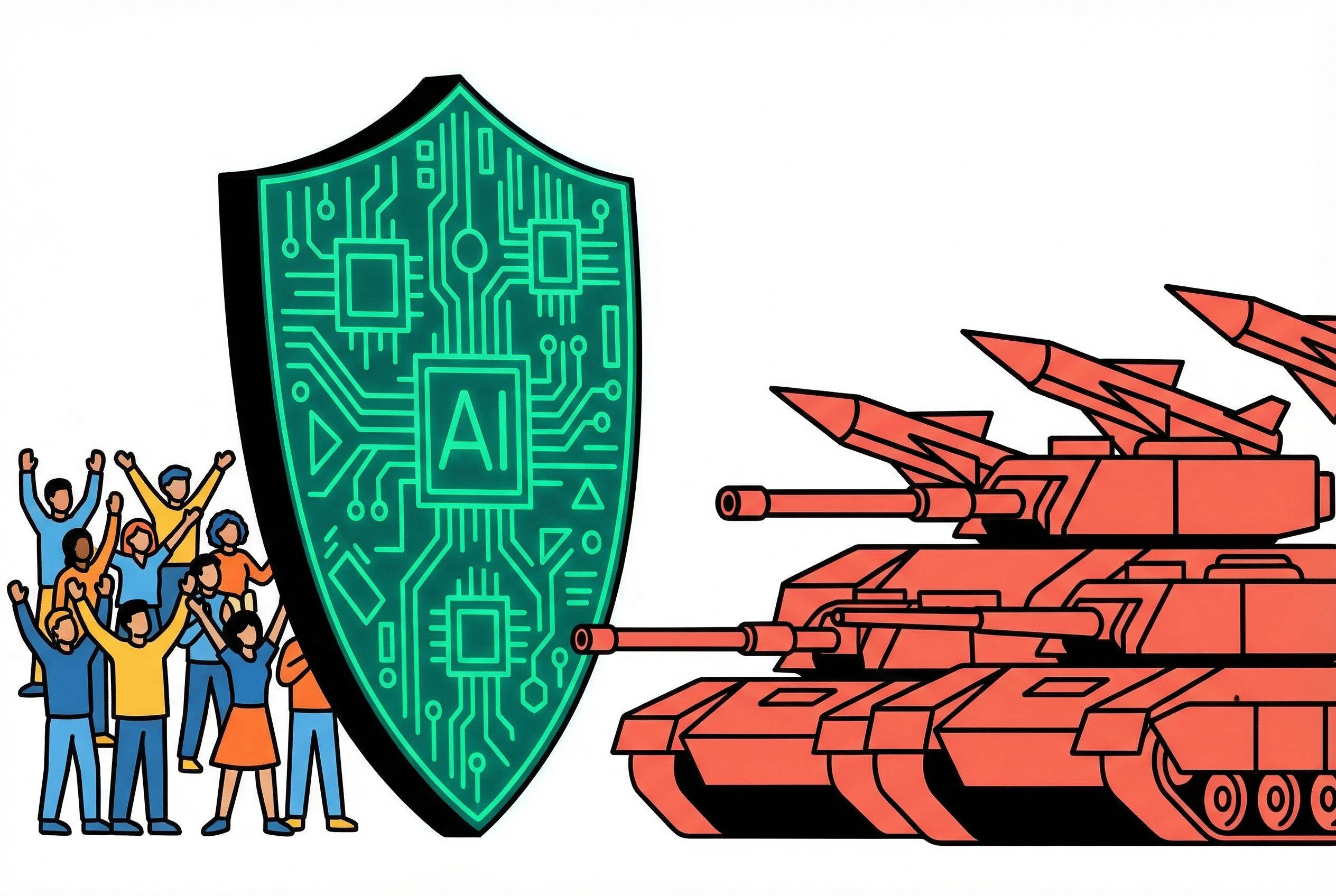
An AI company told the Department of Defense it wouldn't let its model be used for autonomous weapons or mass surveillance of American citizens. The Pentagon retaliated by designating Anthropic a "supply chain risk." Anthropic filed two federal lawsuits alleging illegal retaliation by the Trump administration.
Then something unexpected happened. The American public picked a side.
Claude, Anthropic's AI assistant, shot to the number one spot on the iPhone App Store, dethroning ChatGPT for the first time. Downloads surged. Subscriptions spiked. Social media filled with people posting screenshots of their new Claude Pro accounts, explicitly citing the Pentagon dispute as the reason they switched.
A company chose ethical boundaries over a massive government contract, and the market rewarded it. That's not supposed to happen.
The conventional wisdom was wrong
The standard playbook in defense tech is simple: take the contract, cash the check, let the lawyers sort out the ethics later. The assumption has always been that saying no to the Pentagon is commercial suicide. The defense market is enormous, the reputational damage of being labeled a "risk" is supposedly fatal, and no shareholder or board would tolerate walking away from that kind of revenue.
Anthropic just demonstrated that the assumption is wrong, or at least incomplete. The consumer market for AI is large enough, and public sentiment around AI ethics is strong enough, that a principled stand can generate more goodwill than a defense contract is worth.
That calculation might not hold for every company. Anthropic has a consumer product that millions of people use daily. A defense contractor without consumer brand exposure couldn't replicate this dynamic. But for AI companies that do have a public-facing product, the Anthropic playbook just became a viable strategic option.
What Anthropic actually refused
The details matter here. Anthropic didn't refuse to work with the government entirely. They didn't take a blanket anti-military stance. Their position was specific: Claude should not be used for autonomous weapons systems, and Claude should not be used for surveillance of American citizens.
Those aren't radical positions. They're the kind of ethical boundaries that most people, including most people in the military, would consider reasonable. The Geneva Conventions exist for a reason. The Fourth Amendment exists for a reason. Anthropic's position was essentially: we'll work with you, but not on things that cross established ethical lines.
The Pentagon's response, designating Anthropic a supply chain risk, was disproportionate by any measure. That designation is typically reserved for companies with actual security vulnerabilities or foreign ownership concerns, not companies that decline specific use cases on ethical grounds. The retaliation framing in Anthropic's lawsuits is credible precisely because the punishment doesn't fit the supposed offense.
The consumer response tells us something important
The speed of the public reaction is the most significant data point in this entire story. People didn't just express approval on Twitter. They changed their purchasing behavior. They downloaded a different app. They paid for a different subscription. They made a commercial decision based on a company's ethical stance.
This is unusual. Corporate ethics statements are typically background noise. Companies publish responsible AI principles all the time, and consumers ignore them completely. What made this different was that Anthropic's principles had a visible, concrete cost. They weren't just saying they cared about ethical AI use. They were actively losing a government contract over it. That's the difference between a press release and a position.
The App Store ranking isn't a vanity metric here. It represents real user acquisition at a moment when the AI market is a three-way race between OpenAI, Anthropic, and Google. Every user who switched to Claude during this period is a user that OpenAI lost, not because of a feature comparison, but because of a values comparison.
The incentive structure just changed
This is the part that matters for the industry long-term. Before Anthropic's stand, the incentive structure for AI companies was clear: maximize contracts, minimize controversy, treat ethics as a PR function. The rational move was always to take the money and issue a carefully worded blog post about responsible AI.
Anthropic just introduced a counter-incentive. Taking a principled stand, when it's specific, credible, and costly, can generate consumer loyalty that exceeds the value of the contract you walked away from. That changes the math for every AI company evaluating a morally ambiguous deal.
Will every company follow suit? No. Palantir isn't going to start turning down defense contracts. But the companies competing for consumer market share, the Googles and OpenAIs and Metas, now have evidence that ethical positioning isn't just a cost center. It's a competitive advantage, if you're willing to actually pay for it.
The key phrase is "actually pay for it." Consumers can tell the difference between a company that publishes principles and a company that loses revenue defending them. Anthropic's credibility comes from the fact that the Pentagon dispute is real, the lawsuits are real, and the lost contract revenue is real. You can't fake that.
The legal dimension
The two federal lawsuits Anthropic filed deserve attention beyond the headlines. They're alleging that the Trump administration engaged in illegal retaliation, that the supply chain risk designation was punitive rather than substantive. If those lawsuits succeed, they establish a legal precedent that the government cannot punish technology companies for declining specific use cases on ethical grounds.
That precedent would matter enormously. Right now, the implicit threat of government retaliation is one of the strongest forces pushing companies toward uncritical compliance with defense requests. If a court rules that such retaliation is illegal, it removes the biggest risk factor in saying no. Future companies considering similar stands would know they have legal protection, not just market support.
Even if the lawsuits settle or lose, the filing itself sends a signal. Anthropic is not treating the supply chain designation as a cost of doing business. They're contesting it publicly and legally, which means any future administration considering similar retaliation knows it will face litigation, public scrutiny, and potential consumer backlash.
What this doesn't resolve
It would be easy to turn this into a simple story about good guys and bad guys. It's more complicated than that.
Anthropic still has to build a sustainable business. Consumer goodwill is valuable, but it's not infinite. If Claude's product quality slips, or if a competitor offers something genuinely better, the App Store rankings will shift back regardless of anyone's ethical stance. Principles get you in the door. Product keeps you in the room.
There's also the question of where to draw the line. Anthropic drew it at autonomous weapons and citizen surveillance. Other use cases exist in a gray area. Military logistics? Intelligence analysis of publicly available information? Cybersecurity defense? Every AI company will have to define its own boundaries, and "we said no to weapons" doesn't answer every question that follows.
And the consumer response, while significant, was concentrated among people who follow AI news closely. The broader public, the people who will determine long-term market share, may not know or care about the Pentagon dispute. The initial surge matters, but retention depends on product quality, not political positioning.
The precedent is set
None of those caveats change the fundamental thing that happened here. An AI company took a specific, costly ethical stand. The government punished them for it. The public responded by giving that company more business than it lost.
That sequence of events, from principled refusal to government retaliation to consumer reward, has never played out in the AI industry before. It might not play out the same way next time. But it happened once, which means the argument that ethical stands are always commercially irrational is dead.
For every AI company that will face a similar decision in the coming years, and they all will, Anthropic just proved something that was previously theoretical: you can say no to the most powerful institution on earth and come out ahead. The market for integrity turns out to be larger than the market for compliance.
That's not idealism. That's a data point.
If you use AI tools, pay attention to how providers define (and enforce) boundaries around military and surveillance use, because those policies can shape both product direction and public trust. Watch whether other AI companies adopt similar red lines—or quietly avoid them—since consumer response may start influencing strategy as much as government contracts do. And if you care about these issues, the most direct signal you can send is your purchasing behavior: which assistant you download and subscribe to.