- Cursor’s new Composer 2 model claims Claude Opus 4.6/GPT-5.4-level coding performance at a fraction of the price, signaling rapid cost compression in coding LLMs.
- Developers suspect Composer 2 is built on Moonshot AI’s open-source Kimi K2.5, raising questions about attribution and whether Cursor is complying with the underlying license.
- The bigger story is that AI coding tools are becoming model-agnostic: most durable value accrues to the product/UX and workflow integration layer, not the foundation model.
- If open-source Chinese models deliver near-parity performance at much lower inference cost, economic incentives will push more Western products to adopt them despite geopolitical optics.
- This creates unresolved policy and operational risk: future export controls or regulatory moves could turn a model dependency into a legal or business liability.
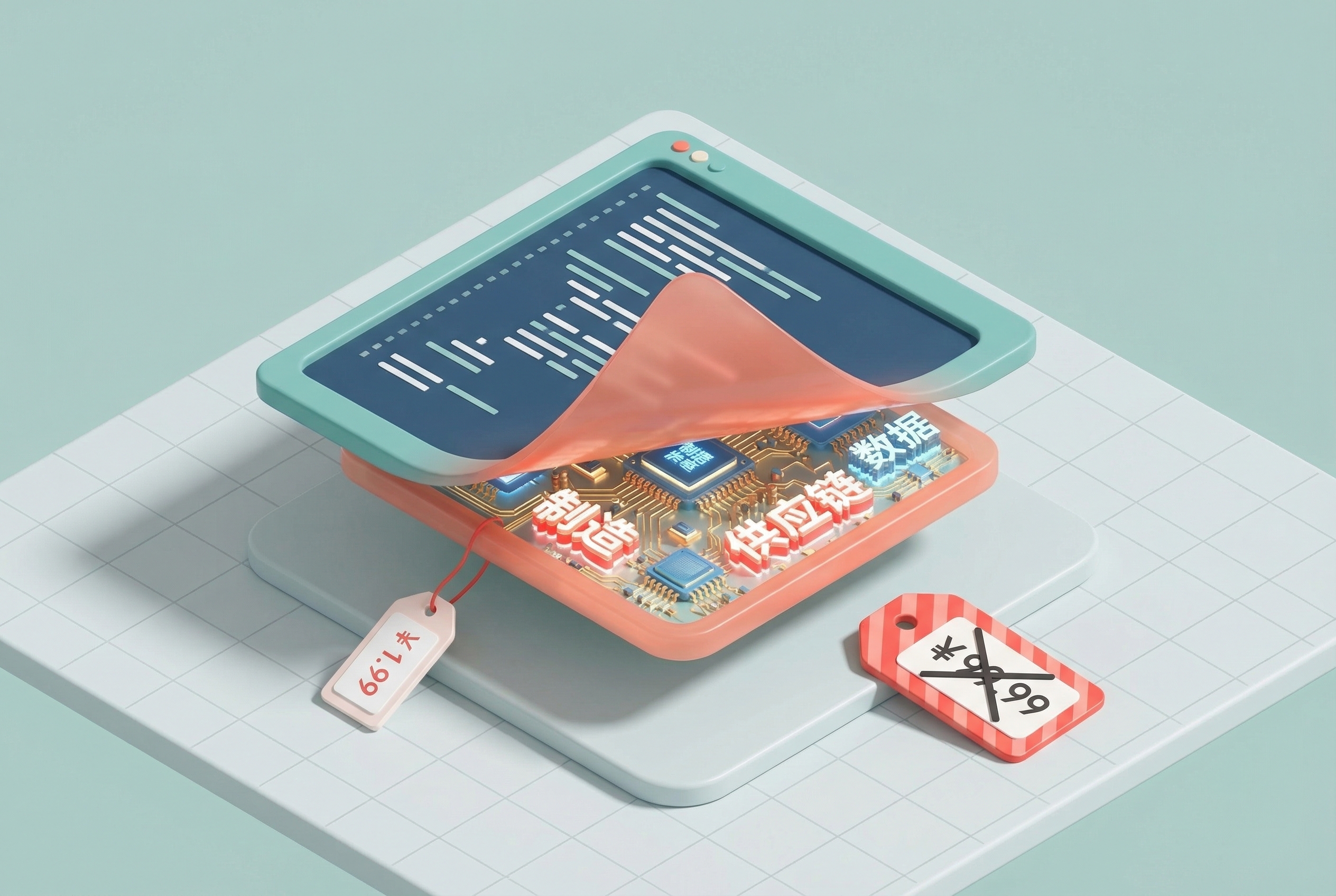
Cursor launched Composer 2 on March 19. It matches Claude Opus 4.6 and GPT-5.4 on coding tasks at $0.50 per million input tokens and $2.50 per million output tokens. Claude Opus 4.6 costs $15 per million output tokens. Composer 2 delivers comparable quality at roughly one-sixth the price.
The company is valued at $9 billion. It's the most-used AI coding tool among professional developers. And its new flagship model appears to be built on top of Moonshot AI's Kimi K2.5, a Chinese open-source model.
That last part is worth paying attention to.
Who owns the model underneath
Within hours of the launch, developers started digging into Composer 2's behavior and noticed patterns consistent with Kimi K2.5. The accusation spread quickly across developer forums: Cursor fine-tuned or rebranded Kimi K2.5 without attributing the base model or complying with its open-source license terms.
Cursor hasn't denied using Kimi K2.5 as a foundation. The question is whether fine-tuning an open-source model and selling it as a proprietary product violates the license under which Kimi K2.5 was released.
The AI industry hasn't resolved this gray zone yet. Open-source AI licenses vary widely. Some permit commercial use with attribution. Some require derivative works to remain open-source. Some are "open weight" but restrict commercial deployment. The specific terms of Kimi K2.5's license determine whether Cursor crossed a line, and reasonable people disagree about the interpretation.
The model is a component, not the product
Forget the licensing drama for a second. AI coding tools are becoming model-agnostic infrastructure. Cursor doesn't care which model powers it. The company cares about the developer experience, the IDE integration, the tab completion, the multi-file editing workflows.
That's why Cursor can swap from Claude to GPT to Kimi K2.5 without most users noticing. The value sits in the product layer built on top, not in the model itself.
| Layer | Who captures value | Example |
|---|---|---|
| Foundation model | Declining margins, commodity pressure | GPT-5.4, Claude Opus 4.6, Kimi K2.5 |
| Fine-tuned model | Moderate margins, differentiation possible | Composer 2, Codex |
| Product/UX layer | Highest margins, strongest lock-in | Cursor, VS Code Copilot, Windsurf |
| Workflow integration | Sticky value, high switching costs | CI/CD pipelines, team configs |
Cursor choosing Kimi K2.5 over Claude or GPT tells you where the cost curve is heading. If a Chinese open-source model delivers 95% of the performance at 15% of the cost, the economic pressure to use it wins out, geopolitical optics or not.
A $9 billion company running on Chinese AI
An American company worth $9 billion, used by developers at every major tech company, building its core product on Chinese AI infrastructure. A year ago, nobody would have predicted this. The US-China AI competition narrative assumed clear separation between the two ecosystems.
That separation is breaking down. Chinese open-source models like Kimi, DeepSeek, and Qwen are competitive with Western proprietary models on many tasks. They cost less. They're available today. Companies under pressure to reduce inference costs are already reaching for them.
The policy questions are obvious but nobody is answering them. Can American developer tools be built on Chinese AI models? Does it matter if the model runs locally and no data leaves the user's machine? And what happens when the Department of Commerce issues new export controls and the foundation model your product depends on becomes a legal liability?
Cursor hasn't addressed any of this publicly. Neither has any other company in a similar position. The industry is moving faster than the policy framework, and by the time regulators catch up, the dependency will already be embedded in millions of developer workflows.
Cursor wants to be the IDE, not the assistant
Bloomberg reported that Cursor is seeking to raise an additional $50 billion, though plans remain early-stage. That trajectory, from startup to $9 billion to potentially $50 billion, only makes sense if Cursor is positioning itself as the default AI development environment. Not just another AI coding assistant.
The Composer 2 launch fits this direction. By building its own model, whatever the base, Cursor reduces its dependency on Anthropic and OpenAI. It controls the cost structure, the fine-tuning, the optimization for its specific use case.
Every AI coding tool company will face this decision: keep paying Anthropic or OpenAI for API access, or build (or fine-tune) your own model optimized for your product. Cursor just showed that the second option is viable, and that the base model doesn't have to come from San Francisco.
Open-source licensing was never built for this
The Composer 2 controversy previews a fight the AI industry is about to have at scale. Thousands of companies are building commercial products on top of open-source models. The license terms are often ambiguous. The enforcement mechanisms are untested. And the incentive to take a well-performing open-source model, fine-tune it, and ship it as proprietary is hard to resist when the alternative is paying $15 per million tokens to Anthropic.
If Moonshot AI pursues the licensing question, it sets a precedent for every open-source AI project. If they don't, it tells the industry that open-source AI licenses are unenforceable in practice, which has its own consequences.
The question of who owns what in the AI model supply chain is about to get loud. Cursor just happened to be the company that forced it into the open.
If you use Cursor or similar tools at work, treat the underlying model as a supply-chain dependency: ask what model is being used, what license governs it, and whether your org is comfortable with the compliance and geopolitical risk. Keep an eye on pricing and model-switch announcements, because vendors may quietly swap backends as costs fall. If data sensitivity matters, clarify whether inference is local or remote and what telemetry is collected, since the “where the model comes from” question is increasingly tied to security and procurement decisions.