- Anthropic’s new enterprise marketplace lets customers buy third-party Claude-based apps using their existing Anthropic budget commitments, signaling a shift from model vendor to platform.
- A marketplace increases switching costs: once enterprises adopt multiple marketplace tools, leaving Claude means abandoning an attached ecosystem, not just swapping an API.
- Allowing spend from existing commitments is “procurement engineering” that expands Anthropic’s share of wallet and removes a major sales hurdle for third-party developers.
- As model performance converges across vendors, competitive advantage shifts from benchmarks to distribution and the breadth/quality of the surrounding tool ecosystem.
- The platform bet only works if high-quality enterprise-grade developers participate; otherwise the marketplace risks filling with thin wrappers, despite incentives like the $100M Claude Partner Network.
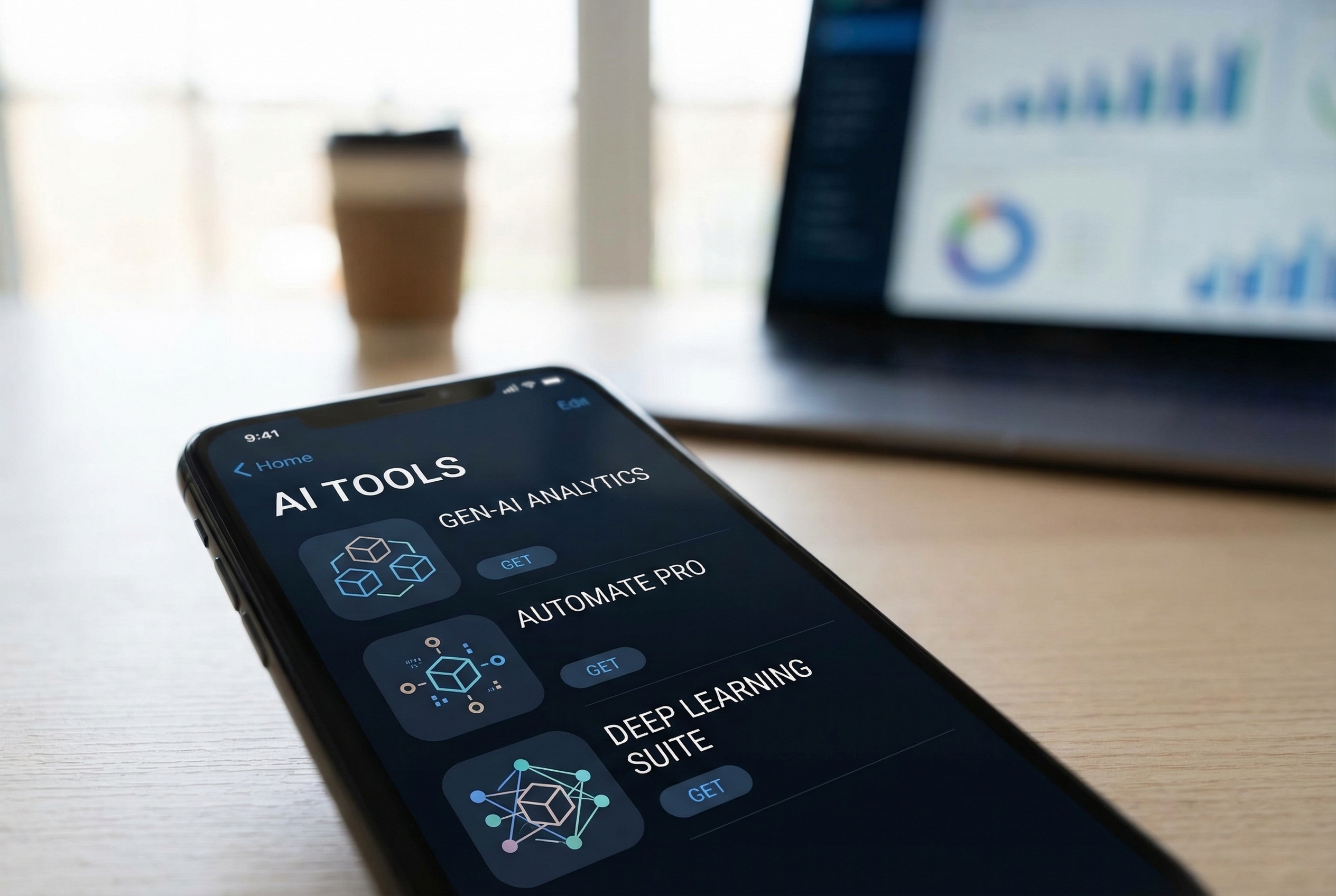
Anthropic quietly launched an enterprise marketplace this week that lets customers buy third-party applications built on Claude using their existing budget commitments. If you're already spending with Anthropic, you can now use that same budget to purchase tools that other companies built on top of Claude.
This is a platform play, and it's a significant shift from Anthropic's previous positioning as a model provider. Model providers sell inference. Platforms sell ecosystems.
What a marketplace means
When Anthropic was just selling Claude API access, its relationship with enterprise customers was transactional. You pay per token, you get model output, that's it. The switching cost was low because any application built on Claude could theoretically be rebuilt on GPT or Gemini with moderate effort.
A marketplace changes that dynamic. Once an enterprise customer buys three or four third-party tools through Anthropic's marketplace, switching away from Claude means abandoning those tools too. Each marketplace purchase adds friction to the exit. That's the entire point of a platform.
Apple understood this with the App Store. Salesforce understood this with AppExchange. AWS understood this with the AWS Marketplace. The model is well-documented: you start by being the best product, then you become the platform that other products are built on, then switching costs lock customers in even if your product stops being the best.
The budget commitment angle
The detail that matters most: customers can use existing Anthropic budget commitments to buy marketplace apps. This is procurement engineering. Enterprise software budgets are notoriously difficult to reallocate. If a team has $200K committed to Anthropic for the year, letting them spend some of that on third-party tools built on Claude means Anthropic captures more of the total AI spend without requiring a new procurement cycle.
It also makes the third-party developers' sales process easier. Instead of convincing an enterprise to open a new vendor relationship, they can say "you can buy this through your existing Anthropic account." That removes one of the biggest friction points in enterprise software sales.
What this means for Claude's competitive position
Model benchmarks are becoming less important. When OpenAI, Anthropic, and Google are all within a few percentage points of each other on standard benchmarks, the competitive advantage shifts to distribution and ecosystem.
Anthropic's marketplace is a bet that the next phase of competition isn't about which model is 3% better on SWE-Bench. It's about which model has the richest ecosystem of tools and applications built around it. If the best document processing tool, the best code review tool, and the best customer service tool are all built on Claude and available through the marketplace, enterprises will choose Claude for the ecosystem, not the model.
That's a more durable competitive advantage than benchmark performance, which gets matched within months of any release. Ecosystem lock-in takes years to build and years to erode.
The risk
Platform plays work when the third-party developers show up. If the marketplace fills with high-quality tools that solve real enterprise problems, Anthropic wins. If it fills with thin wrappers and demo projects, it's just another app store that nobody uses.
The early signal will be whether serious enterprise software companies build on it or whether it attracts only small indie developers looking for distribution. Anthropic's $100 million Claude Partner Network commitment, announced earlier this month, is the carrot designed to attract the former. Whether it works depends on whether the economics make sense for developers, not just for Anthropic.
If you’re buying AI for an enterprise, evaluate Claude not just on model quality but on whether the marketplace already has the specific tools your teams need, because those integrations will shape long-term lock-in and total cost. If you have committed Anthropic spend, consider piloting one or two marketplace apps to test how much procurement friction it actually removes. Watch the marketplace’s next wave of listings—credible enterprise vendors and repeatable use cases are the clearest signal that Anthropic’s platform strategy is working.