- Morgan Stanley argues a major AI capability leap is imminent, driven less by any single model and more by a rapid, concentrated buildup of compute, talent, and data at top U.S. AI labs.
- The key signal is “surplus” infrastructure: leading labs are reportedly building GPU/TPU clusters several times larger than what current flagship models require, implying next-generation training runs at much higher scale.
- Historically, large jumps in training compute have produced emergent abilities that weren’t predictable from prior generations, suggesting another step-function improvement may be near.
- Likely breakthrough areas include reliable autonomous agents, stronger scientific reasoning, long-horizon planning, self-correction, and better cross-domain transfer, with production-grade agent reliability framed as the most economically transformative.
- The note’s core warning is preparedness: businesses, investors, and policymakers may be underpricing and underplanning for the speed and magnitude of the next capability threshold.
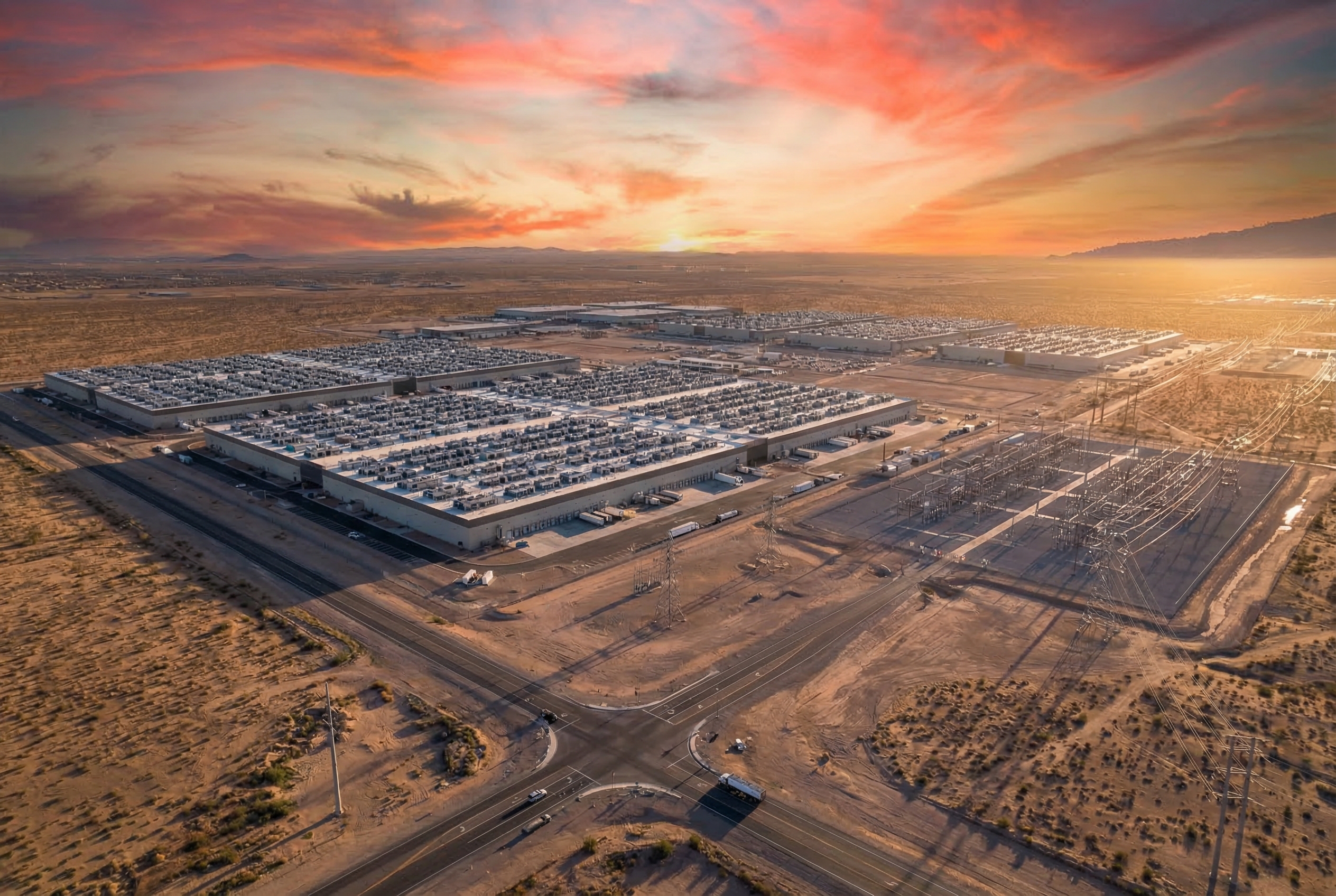
Morgan Stanley published a research note this week warning that a transformative leap in artificial intelligence is imminent. The thesis isn't about any single model or company. It's about the unprecedented accumulation of compute at America's top AI labs and what happens when that compute produces capabilities that the market hasn't priced in.
The note argues that the concentration of GPU infrastructure, talent, and training data at a handful of organizations is creating conditions for a step-function improvement in AI capability, one that most businesses, investors, and policymakers are not prepared for.
It's the kind of prediction that's easy to dismiss as hype. It's also the kind of prediction that, if correct, has profound implications for how organizations should be spending the next 12-18 months.
The compute accumulation thesis
Morgan Stanley's argument rests on a simple observation: the major AI labs are building infrastructure at a scale that far exceeds what current models require.
| Lab | Estimated GPU Cluster Size (2026) | What Current Models Need | Surplus |
|---|---|---|---|
| OpenAI (via Microsoft Azure) | 500,000+ H100/B200 equivalents | ~100,000 for GPT-5.4 training | 5x |
| Google DeepMind | 400,000+ TPU v6/v7 equivalents | ~80,000 for Gemini 3 training | 5x |
| Meta FAIR | 350,000+ GPUs | ~70,000 for Llama 4 training | 5x |
| Anthropic (via AWS/Google) | 200,000+ GPUs | ~50,000 for Claude training | 4x |
| xAI (Colossus) | 200,000+ GPUs | Unknown for Grok training | Unknown |
The surplus is the signal. These companies aren't building five times the infrastructure they need for vanity. They're building it because the next generation of models, the ones currently in development, requires it. And models trained on 5x more compute historically produce capabilities that weren't predictable from the previous generation.
This is the scaling law in action. Each order of magnitude increase in training compute has produced emergent capabilities that didn't exist at the previous scale. Reasoning appeared at one threshold. Complex instruction-following at another. Multi-step planning at another. The question Morgan Stanley is posing is: what emerges at the next threshold?
What "breakthrough" might mean
The research note is deliberately vague about what specific capabilities would constitute a breakthrough, which is either intellectual honesty or hedge fund equivocation. But reading between the lines and looking at what the labs are investing in, the likely candidates are:
| Capability | Why It Matters | Current Status |
|---|---|---|
| Reliable autonomous agents | AI systems that complete multi-step tasks without human oversight | Works in demos, fails in production |
| Scientific reasoning | Models that can formulate and test hypotheses, not just summarize findings | Narrow domains only (protein folding, etc.) |
| Long-horizon planning | Consistent performance on tasks spanning hours or days | Current models lose coherence over time |
| Self-improvement | Models that can identify and correct their own errors systematically | Rudimentary, unreliable |
| Cross-domain transfer | Expertise in one domain genuinely informing reasoning in another | Superficial pattern matching vs deep transfer |
The most impactful would be reliable autonomous agents. If the next generation of models can consistently complete complex, multi-step business processes without human oversight, the economic implications dwarf everything that's happened in AI so far. Not because the technology is new, we've had AI agents for two years, but because reliability at production scale is the difference between a demo and an industry transformation.

Why "not ready" is the right framing
Morgan Stanley's claim that most of the world isn't ready isn't about technical adoption. Most organizations are already using AI in some capacity. "Not ready" means three things:
Infrastructure isn't ready
Most enterprise IT infrastructure was designed for human-speed workflows. If AI agents start operating at machine speed, completing in minutes what takes humans days, the downstream systems those agents interact with, databases, APIs, approval workflows, logging systems, become bottlenecks. Organizations that haven't modernized their integration layers will discover that their AI is only as fast as their slowest legacy system.
Governance isn't ready
When AI models produce a step-function improvement in capability, the governance frameworks designed for current capabilities become immediately obsolete. An AI that can reliably write code is governed differently than an AI that can reliably architect entire systems. An AI that can summarize documents is governed differently than an AI that can autonomously negotiate contracts. Governance lags capability by definition, and a sudden capability jump widens that gap.
Labor markets aren't ready
The current displacement conversation focuses on task-level absorption, AI handling individual tasks within roles. If the next generation of models can handle entire workflows autonomously, the displacement conversation shifts from tasks to roles. That's a different scale of adjustment, and the retraining infrastructure, policy frameworks, and social safety nets that should absorb that adjustment are years behind where they need to be.
The timing problem
Morgan Stanley's note implies this breakthrough is within the next 12-18 months. That timeline is informed by the training schedules of the major labs, the infrastructure buildout timelines, and historical patterns of capability emergence after compute scaling.
If they're right, organizations face a planning horizon that's uncomfortably short. Twelve months isn't enough time to modernize legacy infrastructure, build governance frameworks, retrain workforces, or restructure organizations. It is enough time to start, which is the implicit recommendation behind the research note.
The counterargument is that scaling laws might plateau. That the next order of magnitude in compute might produce incremental improvements rather than emergent capabilities. That "more compute" might have diminishing returns. This is plausible. It's also a bet against a trend that has held consistently for seven years.
What to do with this
Predictions from investment banks deserve skepticism. Morgan Stanley has an interest in driving AI investment activity. The note is, at some level, a sales document.
But the underlying data, the scale of infrastructure being built, the talent being accumulated, the compute being deployed, is not speculative. It's observable. The question isn't whether these resources are being assembled. It's what they produce.
For organizations, the practical takeaway is: plan for a future where AI capabilities make a step-function jump in the next 18 months, but invest in things that have value even if they don't. Modernizing integration infrastructure, building governance frameworks, and developing AI literacy across your workforce are all valuable regardless of whether a breakthrough arrives on Morgan Stanley's timeline.
The worst-case scenario for preparing is that you end up with better infrastructure, clearer governance, and a more adaptable workforce. The worst-case scenario for not preparing is that the breakthrough arrives and you're the organization that spent 18 months debating whether to start.
Assume the next 12–18 months could bring AI systems that are meaningfully more capable than today’s tools, and plan accordingly. Identify a few high-value workflows where reliability matters most (customer ops, finance processes, software delivery) and start instrumenting them now so you can test and adopt stronger models quickly when they arrive. Watch the leading labs’ compute deployments and agent-focused releases as early indicators, and make sure governance, security, and change-management are ready for AI that can execute multi-step tasks with less supervision.