- Claude Science repackages the same Opus 4.5 model and agentic loop as Claude Code, but swaps in scientific tools and a reproducibility layer.
- The real product value isn’t new model weights; it’s the harness—tool integrations, execution environment, and verification that make outputs auditable.
- Once a model crosses a capability threshold, the moat shifts from model intelligence to the engineering around it: tooling plus checks that prevent plausible-but-wrong results.
- Any domain with mature tools and clear ways to verify outcomes can be turned into an effective agent by applying the same harness pattern.
- Anthropic’s demo (e.g., drug candidate exploration for phenylketonuria) illustrates that domain change is mostly about wiring and validation, not inventing a new model.
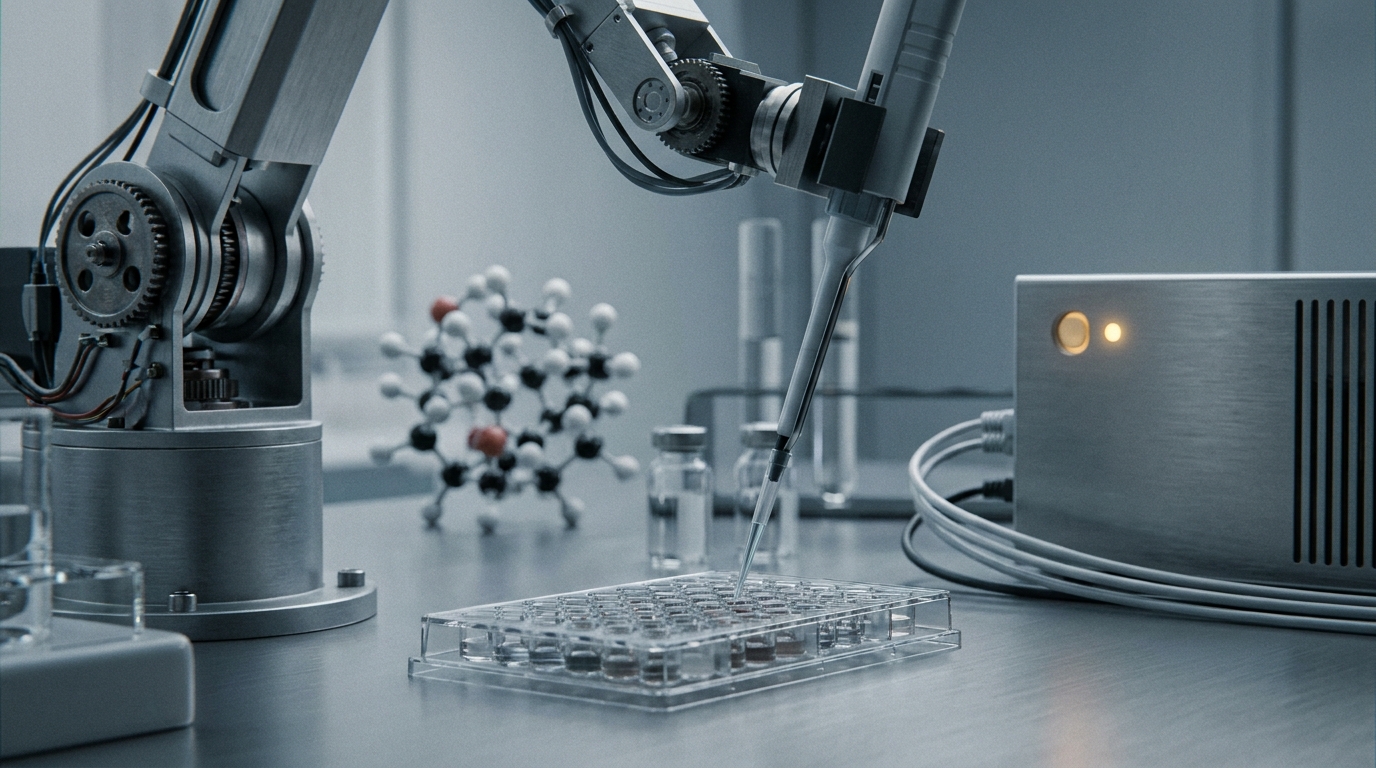
Claude Science is Claude Code pointed at a different toolbox. Same model, same autonomous loop, new tools and a reproducibility layer bolted on.
The reusable asset is the harness, not the model. Opus 4.5 was already research-capable, what made it useful was the tools and the checking wrapped around it.
If your field has real tools and a way to verify results, it is a candidate for the same treatment. The moat is the harness you build, not the weights you rent.
On June 30 Anthropic shipped Claude Science and put it in front of every paid Claude subscriber. The pitch was simple and, if you have been paying attention, a little familiar. It does for scientific research what Claude Code does for software. You give it a high-level instruction, it writes code, runs that code on a compute cluster, and comes back with results you can trace and reproduce. It talks to genetics, chemistry, and protein biology tools instead of your file system and your test runner.
In the demo, Anthropic's Alexander Tarashansky used it to surface new drug candidates for phenylketonuria, a rare genetic disease. Impressive on its own. But the more useful thing to notice is what did not change to get there.
Same model, different toolbox
Claude Science is not a new model. It runs on Opus 4.5, the same weights already sitting behind Claude Code and your API calls. Harvard physicist Matthew Schwartz, who tried it, put the model's raw research ability at roughly the level of a second-year graduate student for executing scientific projects. That number is the tell. A second-year grad student is genuinely capable and genuinely needs supervision, tooling, and a lab that keeps them honest. The model was already at that level before this product existed.
So what did Anthropic actually build? A harness. They took the same agentic loop that makes Claude Code work, plan, write code, run it, read the result, adjust, and wired it to a different set of tools. Protein biology instead of package managers. Compute clusters instead of a dev container. A verification story built for experiments instead of unit tests.
Strip away the lab coat and the shape is identical to the coding agent. Instruction in. Autonomous work in the middle. Verifiable artifact out. The domain swapped. The pattern held.
The harness is the product
This is the part worth sitting with if you build things for a living. For two years the industry has argued about models. Which one is smartest, which one is cheapest, which benchmark moved. Claude Science is a quiet argument that the model was never the hard part once it crossed a capability line. The hard part is everything around it.
The tools are the hard part. Claude Science is useful because someone connected it to real genetics and chemistry tooling and taught the agent how to call it. That integration work is where the value lives, and it is not something the model gives you for free. It is engineering.
The reproducibility layer is the hard part. Anthropic made "trace and verify results" a feature, not an afterthought. In science, an answer you cannot reproduce is not an answer, it is a rumor. So the harness was built to keep the work checkable. That is the same instinct that separates a coding agent you can ship from one that quietly writes plausible garbage. The agent does the middle. The harness makes the middle auditable.
None of that is model magic. It is the boring, ownable engineering that sits between a capable model and a capable product.
Your vertical is a harness away
The practical read is this. Anthropic just demonstrated, on their own dime, that the coding-agent template is portable. Take a domain with real tools and a real way to check results, wrap the model in those tools plus a verification loop, and you get a working agent for that domain. Software was first because software has the cleanest feedback signal on earth. Code either runs or it does not. Tests either pass or they fail.
Science was a natural second because it has tools you can call and results you can reproduce. The reproducibility requirement that makes science hard is also what makes it a good fit, it gives the harness something concrete to verify against.
Now ask the obvious question about your own field. Does it have tools an agent could call through an API? Does it have a way to check whether an answer is right that does not require a human to eyeball it every time? Finance has both. Logistics has both. Circuit design, legal discovery, clinical trial analysis, quantitative marketing, most of them have both. Each one is a harness away from its own version of this product.
The uncomfortable flip side is that the harness is where the competition moves. If the model is a rented commodity that everyone can call, and the template for wrapping it is now public, then the durable advantage is the quality of your tools and the rigor of your verification. Not access to the smartest model. The smartest model is a second-year grad student for everyone.
The caution that came free
Notice what Anthropic did not do. They did not hand the agent a beaker and call it a scientist. They gave it tools and a reproducibility layer and a demo where a human researcher drove it toward a specific target. The grad-student framing is the honest one. You do not leave a second-year alone with the drug pipeline and go on vacation. You point them at a problem, you check the work, you own the result.
That is the same discipline that keeps a coding agent from wrecking a codebase. Specify clearly up front. Verify hard on the way out. The agent crosses the middle faster than any human could, and the two ends stay yours. Claude Science did not remove that responsibility. It moved it into a new building.
The story everyone will tell about June 30 is that AI is doing science now. The more useful story is smaller and more repeatable. A capable model plus a domain toolbox plus a way to check the work equals a working agent for that domain. Anthropic built the science version. The template is sitting in plain view, and it does not care what industry you are in.
If you’re building with AI, focus less on chasing the “best” model and more on building a harness: connect the agent to the real tools your domain uses, give it a reliable way to run work end-to-end, and bake in verification so results are traceable and reproducible. Look for workflows where feedback signals are crisp (tests, experiments, audits, simulations), because those are easiest to turn into dependable agents. And if you’re evaluating vendors, ask what their reproducibility and checking story is—not just what model they run.